
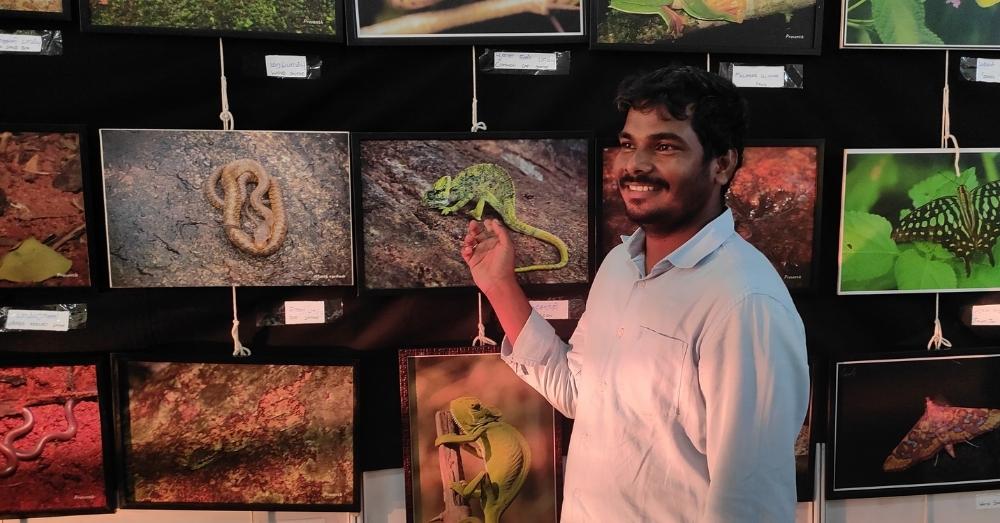
Meet an Educator is a monthly series by Early Bird that features the work of educators across India who are actively spreading the joy of birds and nature. This month’s featured educator is Thanigaivel Annamalai, an environmental researcher with ATREE who aims to bridge the gap between science and people.
Do tell us about yourself, where you are from, and your work
I am Thanigaivel Annamalai, an Environmental Researcher with a deep appreciation for the natural world. Growing up amidst the Eastern Ghats and the agricultural landscapes of Salem, Tamil Nadu, nurtured my early curiosity and seamlessly shaped my lifelong interest in ecology and conservation. This eventually led me to a career in biodiversity research and conservation.
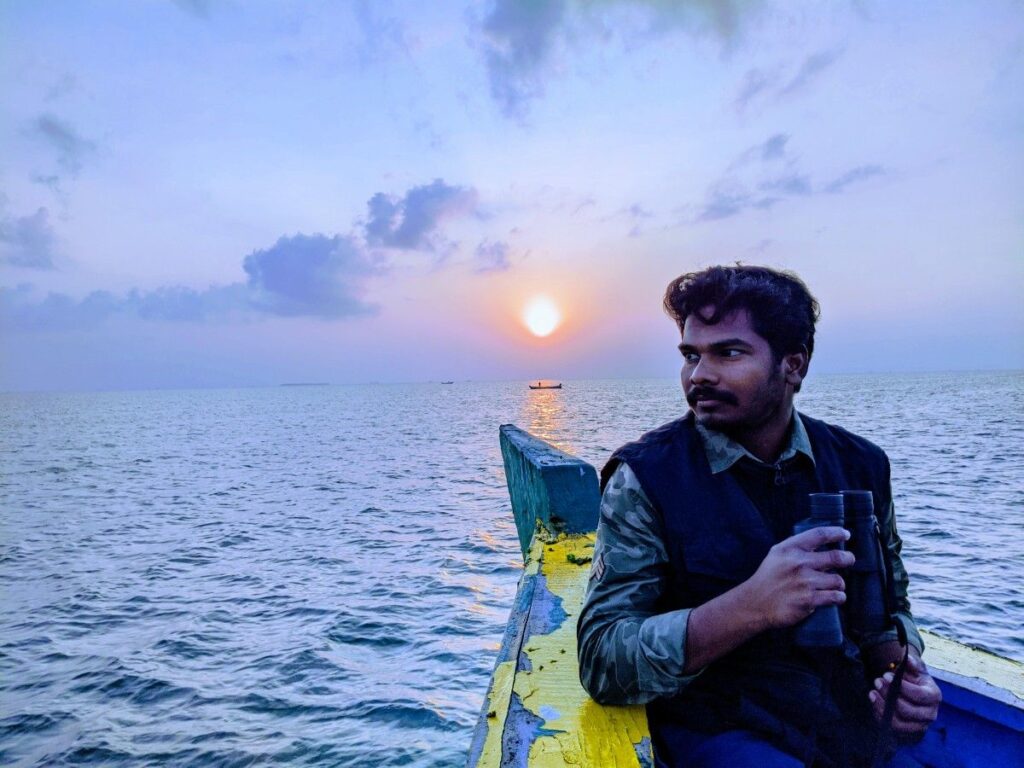
After completing my doctoral studies on the effects of pesticides on microinvertebrates, I joined ATREE’s Agasthyamalai Community Conservation Centre (ACCC) in Tirunelveli, Tamil Nadu. Here, my research currently focuses on the nesting ecology of waterbirds and nocturnal fauna, particularly snakes, while also encompassing river ecosystems and habitat restoration.
Alongside research, I actively participate in community-based conservation and nature education through field-based learning programmes and biodiversity walks. Through these efforts, I aim to bridge the gap between science and the public by making biodiversity more accessible and inspiring people to observe, appreciate, and conserve the natural world.
What excites you about the natural world?
Nature has always fascinated me because it reveals how life is sustained through intricate relationships and interdependence. I am particularly drawn to co-evolution—the process through which different species have shaped each other’s evolution over thousands of years. For example, the relationship between a bird’s beak and the size of the fruit it feeds on reflects a long history of mutual adaptation rather than chance. This relationship extends to seed dispersal and the persistence of ecosystems. Observing these interactions in the field is endlessly fascinating.
I am equally interested in animal behaviour, whether it is waterbirds partitioning resources in wetlands, nocturnal species optimising their vision for darkness, or reptiles occupying specialised habitats. Even among snakes, tail length reflects ecological adaptation. Arboreal species such as the Green Vine snake have long tails that aid in climbing, whereas fossorial species such as the sand boa have short tails adapted for life beneath the soil. Every observation raises new questions and deepens my understanding of nature. The more time I spend in the field, the more I realise that every species has a role and every interaction tells a story.
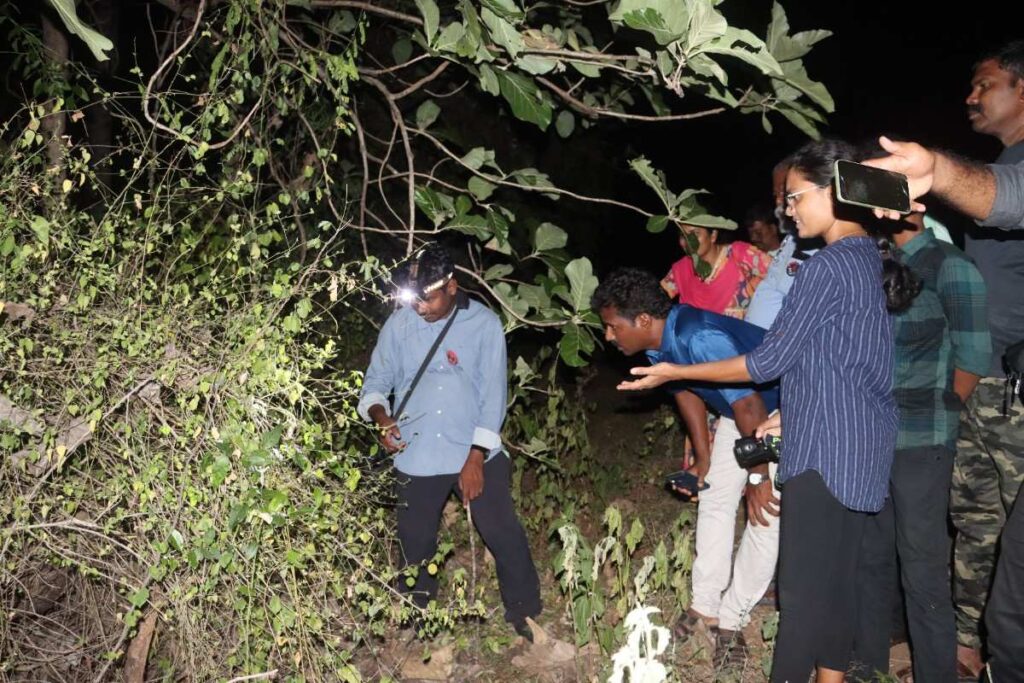
Photo credits: Thalavai Pandi S
When and how did you get interested in bird/nature education?
My interest in bird and nature education developed gradually through years of observing wildlife and exploring natural landscapes. It began on my family’s farm, where my grandmother, Chinnammal, introduced me to ecological relationships through stories and observations, such as the one between edible mushrooms and termites.
My appreciation for nature deepened during my doctoral studies at the Sri Paramakalyani Centre of Excellence in Environmental Sciences, Alwarkurichi. During morning walks at University Potrai, Dr. Ravichandran taught me to appreciate the ecological roles of various organisms, and my research guide, Dr. S. Senthil-Nathan, encouraged me to document wildlife through photography.
A turning point came when Mr. M. Mathivanan and Maria Antony invited me to join ATREE’s Agasthyamalai Community Conservation Centre (ACCC). Through its nature education programmes, I learned to share stories of biodiversity through a conservation lens. Inspired by the work of pioneers who are leading the ACCC team, Dr. R. Ganesan, Dr. T. Ganesh, and Dr. Soubadra Devy, I continue to communicate stories of ecological relationships to connect people with nature.

What do you hope to achieve through your education work?
I hope to create meaningful connections between landscapes, people, culture, and biodiversity. I strongly believe that biodiversity cannot be conserved without understanding the habitats, traditional knowledge, and cultural values that connect people with nature. In many places, rare trees and species continue to survive because they are protected through local beliefs and cultural practices. Nature education, therefore, should not only teach species identification but also help people appreciate these relationships and the stories behind them.
Not everyone connects with nature in the same way. Some are drawn to birds, others to butterflies, reptiles, plants, or landscapes. Any one of these can become a doorway to understanding the larger ecological system. Once people develop an attachment to even a single element of nature, they often become curious about the wider web of life that supports it.
For example, while everyone admires butterflies, few notice the importance of caterpillars and the host plants they depend on. Understanding these connections helps people recognise the value of every species and every stage of life. Ultimately, I hope to inspire people to become more observant, curious, and responsible towards the environment, recognising that every component of nature is interconnected and essential for maintaining ecological balance.
Why do you believe it is important for children to learn about birds or connect with nature?
I believe that connecting with nature is important not only for children but equally for adults, especially parents and teachers. While children are naturally curious and eager to explore, expecting them to develop an understanding of nature independently is neither realistic nor effective. The attitudes and behaviours of adults strongly influence how children perceive and value the environment.
If parents and teachers develop a genuine interest in birds, plants, insects, and local ecosystems, children will naturally follow through observation and shared experiences. Learning should begin with us. Through our curiosity and actions, we can inspire younger generations to appreciate nature. A simple walk, observing a bird building its nest or a butterfly visiting a flower, can become a meaningful learning experience when adults participate with enthusiasm.
I believe nature education should create opportunities for families and communities to learn together, rather than focusing solely on children. Such shared experiences foster curiosity, observation, and a sense of responsibility across generations. When people of all ages develop a connection with nature, they are more likely to value biodiversity and contribute to its conservation.
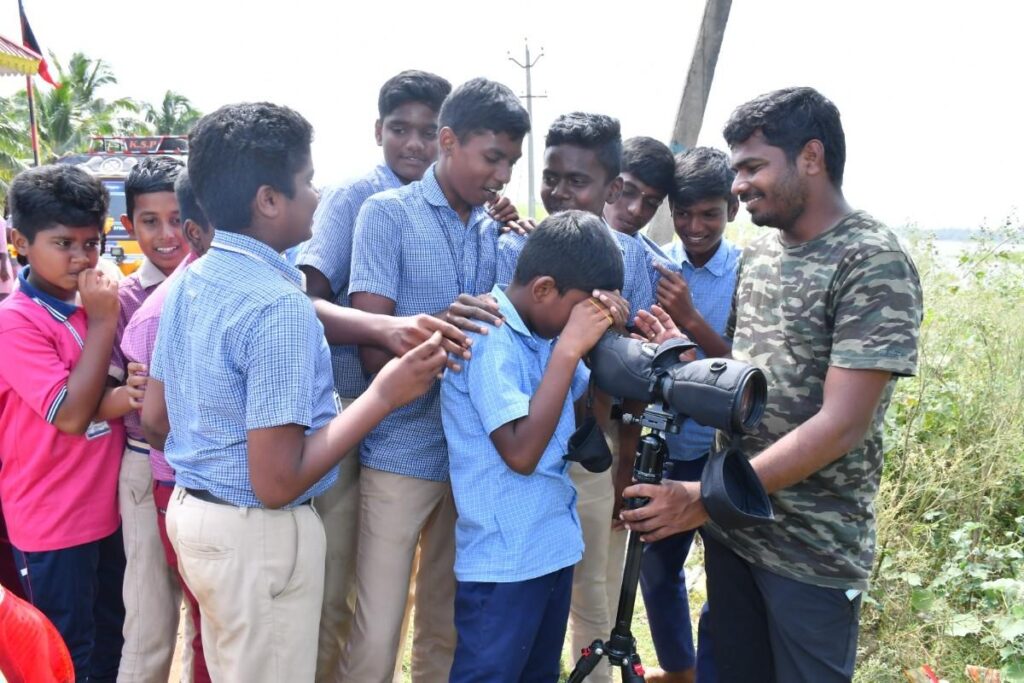
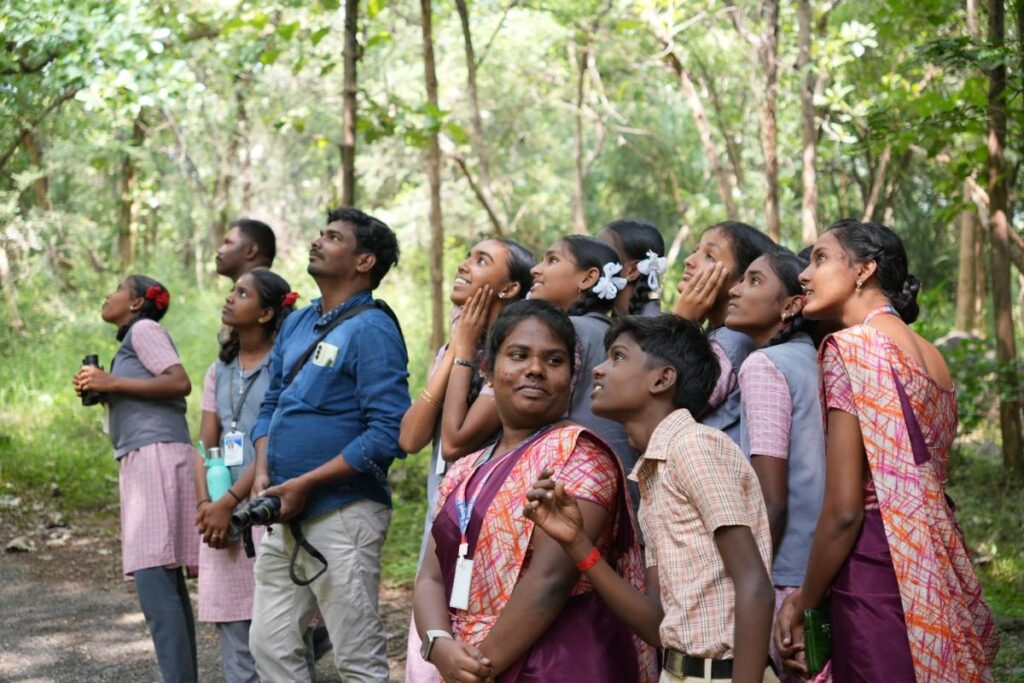
Photo credits: Gnana Sri Bhavani
What tools or resources have helped you in teaching about birds? Can you describe an approach that has worked exceptionally well for you?
One of the most effective tools in nature education is direct observation. Rather than focusing only on identifying birds, I encourage participants to observe their behaviour and ecological relationships. I ask them to notice where a bird is positioned, how it moves, what it feeds on, and how it interacts with other species and its habitat. These simple questions often lead to deeper discussions about adaptation, ecology, and evolution.
For example, during wetland visits, I encourage participants to compare how different birds use the same habitat. Cormorants dive underwater to catch fish, while herons and egrets forage in shallow water, and jacanas walk on floating vegetation. Through these observations, participants naturally understand concepts such as resource partitioning and ecological niches without formal lectures.
I use simple tools such as binoculars, spotting scopes, field guides, and illustrated bird brochures to support these experiences. However, I believe the most powerful tool is curiosity. My approach is based on experiential learning, where participants observe, ask questions, and interpret what they see in the field. By connecting behaviour with ecological function, they begin to see birds not as isolated species but as part of a larger, interconnected ecosystem.
I also adapt my communication to suit different audiences, whether they are school students, local communities, or professionals, using stories and field observations to make learning relatable. I have learned that meaningful change takes time, and even a small shift in perspective can be the beginning of a lifelong appreciation for nature and conservation.
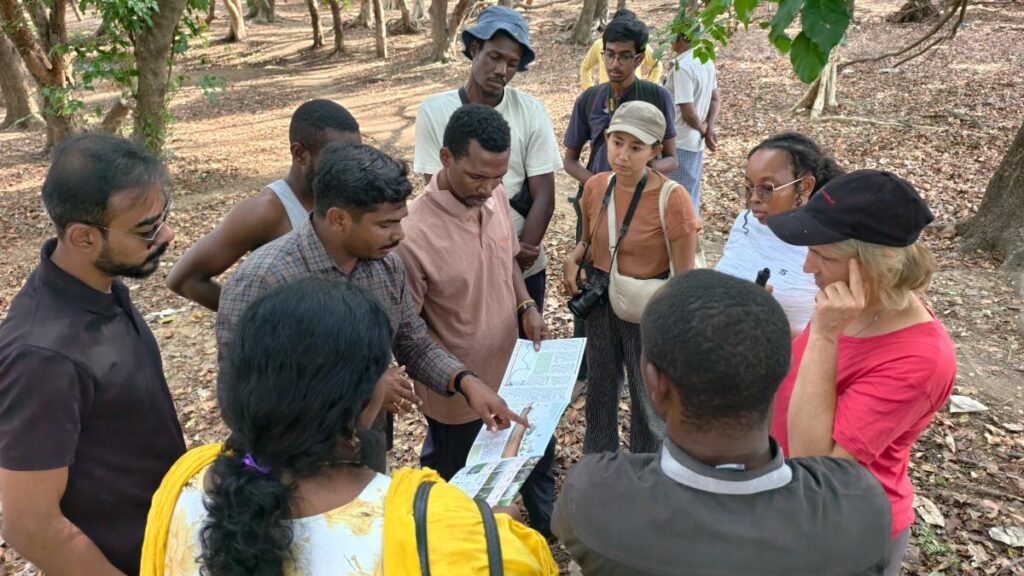
Have you encountered a significant challenge as a bird/nature educator? How did you overcome it?
One of the biggest challenges I have faced as a nature educator is changing people’s perceptions rather than simply sharing information. Many participants expect birdwatching to be about quickly identifying species or completing a checklist, whereas nature education requires patience, observation, and an understanding of ecological relationships. I have also encountered deep-rooted fears and misconceptions, particularly about reptiles such as snakes, which are often viewed as harmful to humans. Moreover, species such as snakes should not be valued solely for their role in controlling pests like rodents; their ecological importance extends far beyond the benefits they provide to humans.
To overcome these challenges, I focus on building curiosity before providing explanations. Rather than immediately correcting misconceptions, I encourage participants to observe behaviour, ask questions, and consider an organism’s role within its ecosystem. I also use examples from ecological restoration to illustrate how conservation requires understanding ecological processes. For instance, tree planting is often viewed as conservation, with a preference given to species that provide direct benefits to humans, such as fruit trees. Yet planting trees in grasslands or introducing unsuitable species in riparian areas can harm ecosystem health. Through my nature education programmes, I use such examples to help schools and local civil society organisations rethink their approach to restoration. Over time, I have found that fostering curiosity and observation is far more effective than simply providing facts.
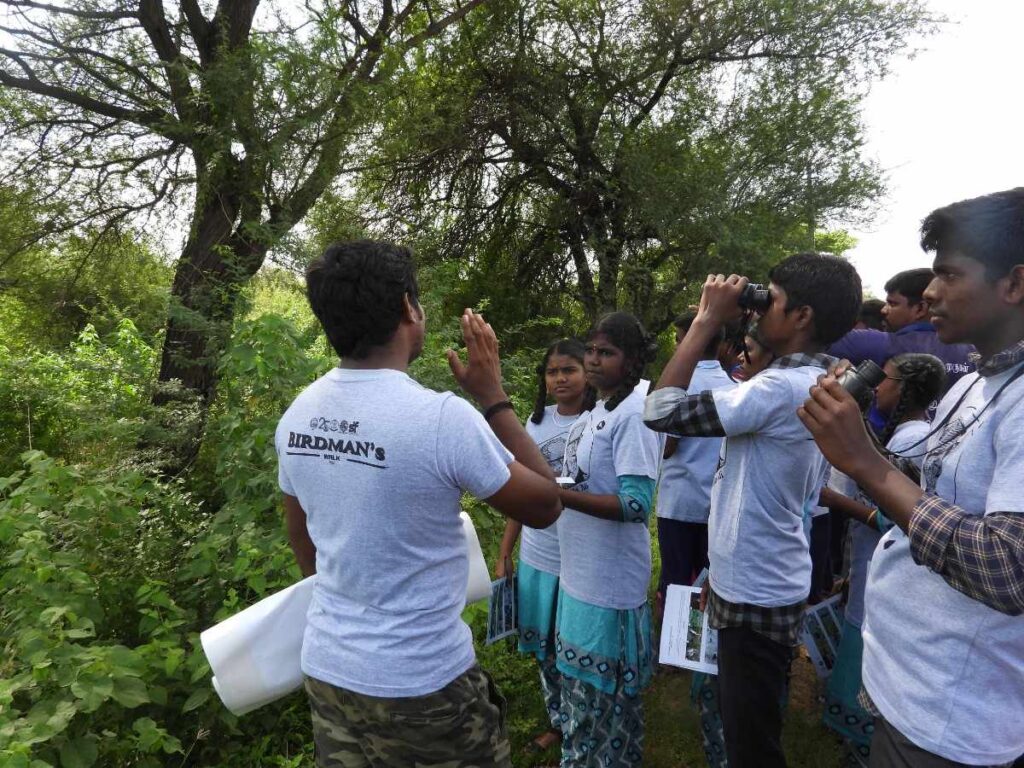
Do share any memorable moments or experiences you have had while teaching kids about birds/nature. Can you recall any insightful instance that shaped your perspective?
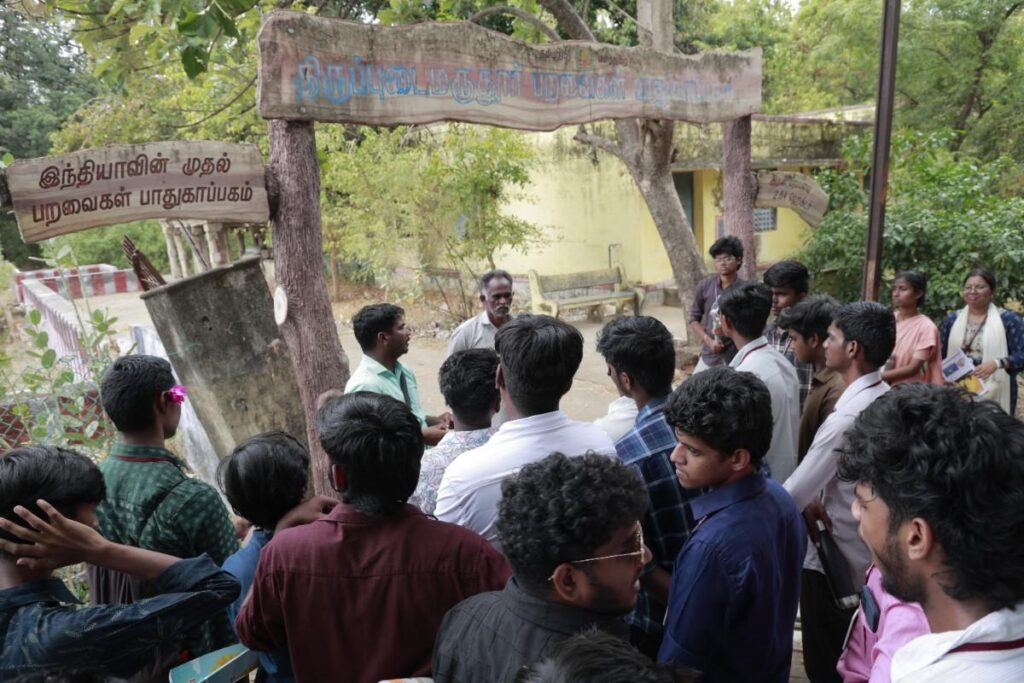
One of my most memorable experiences was during a field session with young students in Thirupudaimaruthur, a village that hosted large bird nesting colonies above human settlements. At the beginning of the walk, most students were interested only in identifying and counting bird species. Rather than providing answers immediately, I encouraged them to spend time quietly observing the birds and their behaviour.
As they watched more carefully, they began to notice details that had initially escaped their attention. They observed birds carrying nesting material, feeding their chicks, defending their nests, and different species occupying different sections of the tree canopy. This observation sparked a discussion on habitat use, resource sharing, and ecological balance.
I would like to share another experience close to my heart, the Birdman’s Walk. It is a nature education programme for children with special needs, organised by the ACCC team and funded by Sundaram Finance and TVS Brakes India Ltd., on the birth anniversary of Dr. Salim Ali. Now conducted for over five years, in one of the early years, visually impaired students were introduced to the calls of different bird species. What awed me was that when the same activity was repeated two years later, the students easily recognised even difficult-to-identify bird calls. This demonstrates their potential and highlights the need for more inclusive nature education programmes.
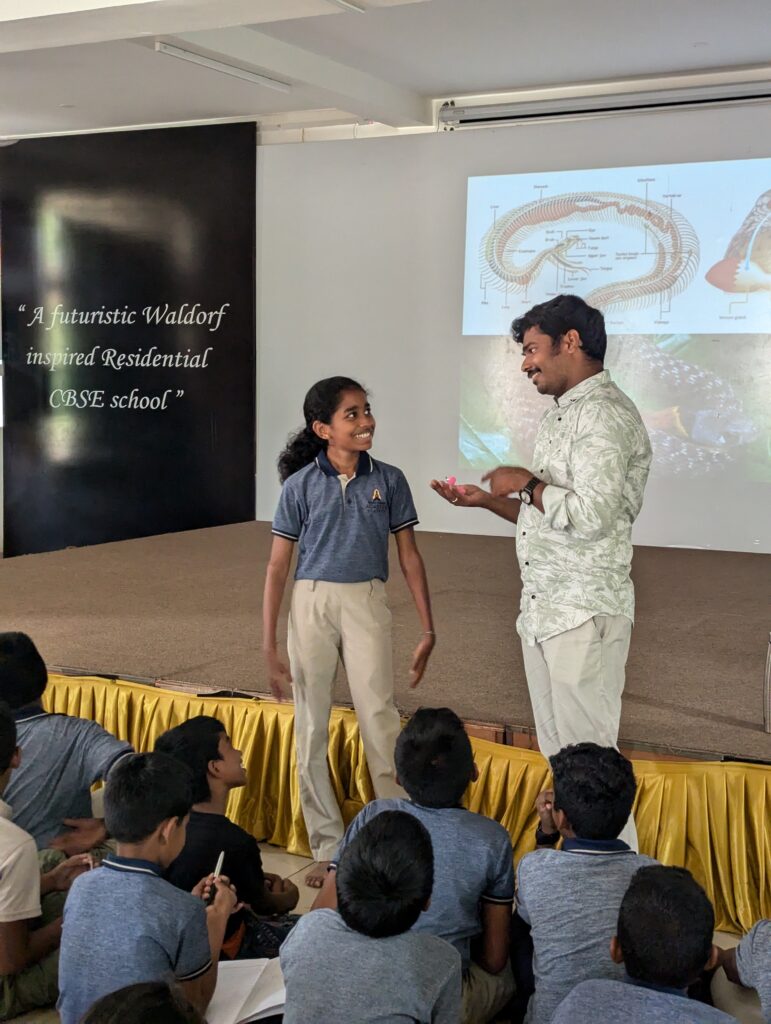
Photo credits: Preethi S Priya
Have you noticed any changes in your learners after they received exposure to birds and nature-based learning? If yes, what are they? If not, why do you think that is?
Yes, I have noticed significant changes in learners after they are exposed to birds and nature-based learning. With time and guided observation, they begin to ask deeper questions. Their questions shift from asking “What bird is this?” to “Why is it behaving this way?” This shift from simply identifying organisms to understanding ecological relationships is one of the most encouraging outcomes of nature education.
I have also observed that learners become more sensitive to environmental issues. They begin to recognise the impacts of habitat loss, pollution, and human activity on wildlife, and often express a stronger interest in conservation. Some participants continue their engagement beyond the sessions by documenting their observations, sharing their experiences with others, or participating in citizen science and local conservation activities. I have also found that nature education helps challenge common misconceptions and fears, especially surrounding reptiles, and encourages a more positive and informed relationship between people and nature.
These changes may not occur immediately for everyone, but even small increases in curiosity and observation are meaningful. I believe that once people begin to notice the connections within nature, they develop a deeper appreciation for biodiversity and a lasting sense of responsibility towards protecting the ecosystems around them.
What message would you have for your fellow educators or somebody starting their nature education journey?
My message to fellow educators and those beginning their journey in nature education is to focus on observation rather than fact-collection. Nature education is not about merely knowing names, but about helping people notice, question, and understand the world around them.
It is equally important to remain learners ourselves. Nature is endlessly complex, and every field visit offers an opportunity to discover something new. Most importantly, be patient. Not everyone will connect with nature instantly, but a single meaningful experience can spark lifelong curiosity. If we can help people slow down, observe, and appreciate the relationships that sustain life around them, we will not only create better learners but also more responsible stewards of nature.
We must also remain humble in our knowledge and see every field experience as an opportunity for everyone, including ourselves. Let us be kind to fellow beginners and pave the way for other young educators.
Fantastic Thanigai. Amazed by your passion and growth and consistent learning with nature. There is nothing like being with nature. You have wonderful surroundings and your keen interest in biological organisms made you what you wanted to be. I am proud to have been your one of the mentors. From every walks of life you have gained enormously and you are extending the knowledge to the next generation with broader and insightful perspective. you are born to educate those who are interested in any aspect that you have mastered. I am writing this from a place close to old Courtallam with beautiful nature. I will come back again. Congratulations 🎉🎉 and best wishes to serve nature and nature enthusiasts.
A detailed Explanation with Experience is profound. Happy to read the article – Meet the Educator. Its Inspiring to bridge – curiosity- Regular school Curriculum- Learning outside the Classroom- Real Conservation. Good Wishes to Thanigaivel and Team.
Very inspiring. keep rocking.