
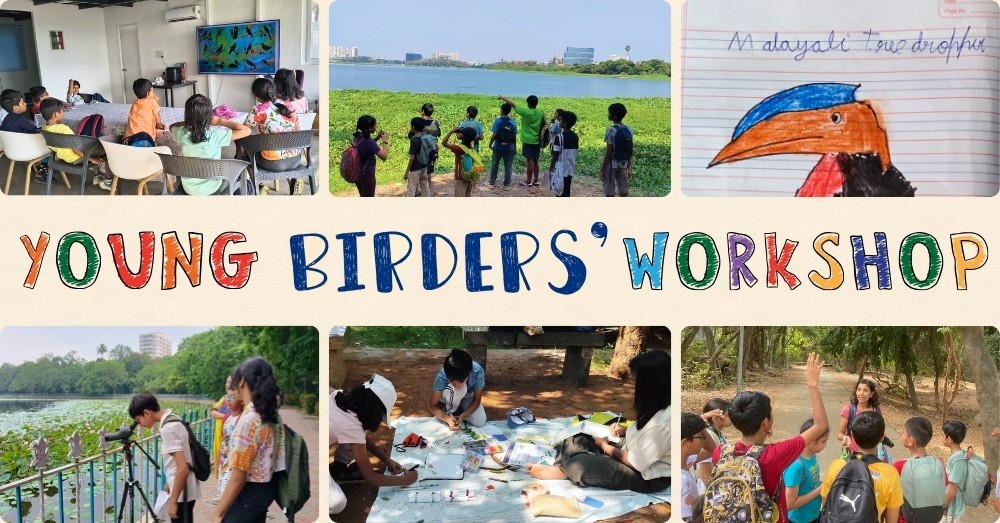
Since 2021, Early Bird’s Young Birders’ Workshop (YBW) has been a launchpad for young birders. Built around four core themes : Nature Journaling, Bird Habitats, Bird Behavior, and the Life Cycle of a Bird, the program has sparked a passion for nature in over 250 children across the country. Read more about the workshop in our blog from last year – From Feathers to Friendships: YBW 2025.
Many participants asked for bird walks as part of the workshop, prompting us to explore how in-person sessions could offer an even deeper, hands-on immersion into the natural world. So, early this year, we reached out to our network of nature educators to find those interested in anchoring localized, in-person editions of the YBW this summer and the response was great. We shared our comprehensive toolkits, course materials, and learnings with the enthusiastic educators who came forward and after several conversations and prep calls – four in-person batches took flight alongside our national online batch. Here are a few highlights from this year’s batches –
Bengaluru Batch led by Chandra Sekhar Bandi
This batch paired indoor conceptual sessions with long outdoor bird walks over multiple weekends. During the indoor session breaks, the participants witnessed from a safe distance – a Black Drongo feeding the chicks and an Indian White-Eye nesting close to the classroom. They also had a lot of fun imitating bird calls! On one of the bird walks, a Common Kingfisher held their attention for 20 minutes as they watched in awe while it dived into the water, caught a fish, perched on a branch, and devoured its prey. Another highlight for everyone was a lake ecologist’s session, which pushed the kids to think like real conservationists about aquatic vegetation and wetland habitats.
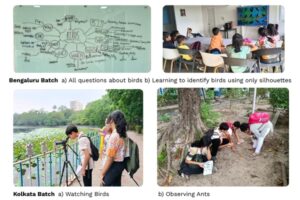
Kolkata Batch led by Titash Chakrabarti from the School of Birds
Blending three outdoor explorations with two focused online syncs, the Kolkata batch’s curiosity frequently wandered beyond birds: the children spontaneously followed a trail of ants, sampled flower nectar, climbed trees for the sheer joy of it, and engaged in discussions on animal behaviour at every opportunity. Perhaps the most satisfying moment came when a lesson from the online session unfolded before their eyes in the field: having learnt that kingfishers are not limited to eating fish alone, the children were delighted to watch a kingfisher catch and devour a dragonfly during the final walk – a perfect reminder that nature is often the best teacher.
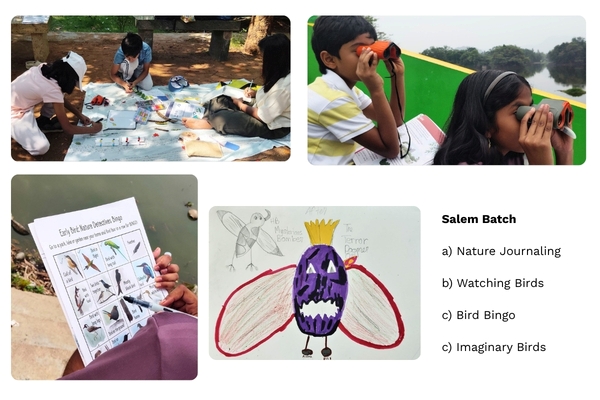
Salem Batch led by Angeline Mano
This batch was conducted entirely outdoors across five immersive field sessions. This open-air setting gave the young birders a hands-on opportunity to practice using binoculars, listen to bird calls, and observe intricate bird behaviours up close. While exploring these spaces, the participants spotted a variety of waterbirds and spent time understanding the vital importance of wetland habitats. The experience left a lasting impression on both the kids and their mentor. “As an educator, it was genuinely a fulfilling and successful workshop to witness the children’s curiosity, excitement, and eagerness to learn,” says Angeline.
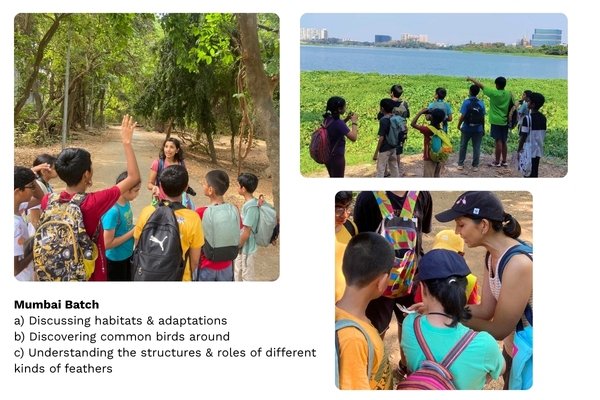
Mumbai Batch led by Megha Gupta
This batch was also completely outdoor consisting of eight sessions spread over two weeks. The participants explored different habitats – a garden, a wetland, and an open forest. At the end of the workshop, parents shared how much their children had grown. Beyond the knowledge of birds, the kids developed endurance by waking up early and braving Mumbai’s humid May heat. They also built independence by exploring new places without their parents, and fostered a deep love for nature by keeping a journal during subsequent family trips. “Though I was the facilitator, I too learned so much about birds and children! It was a demanding experience, but immensely rewarding,” says Megha.
Online Batch led by the Early Bird Team
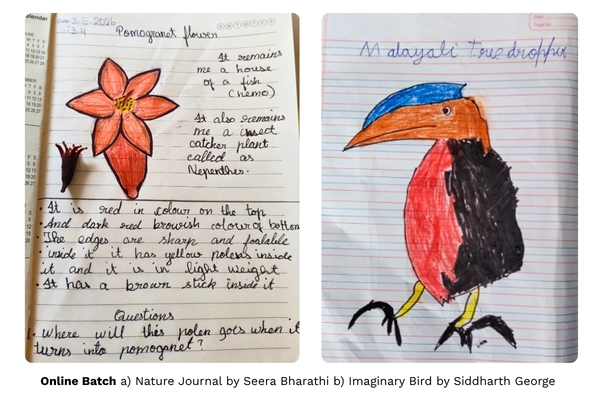
This batch brought together eager minds with a shared love for nature, from across India. Over ten interactive sessions – assignments and creative games brought core concepts to life. Participants sketched detailed entries in their nature journals, invented imaginary birds, and bonded over lively rounds of Picto-Bird. Beyond gaining knowledge, these young naturalists found companionship among peers who shared the same passion. Parents and participants shared heartfelt feedback, noting that the sessions sparked an interest in observing nature more closely and children learned to look past simple identification to truly decode bird behaviour and sounds.
Plan Your Own Nature Workshop
Whether you are a parent, a teacher, or a nature enthusiast, you can launch an impactful workshop of your own using our ready-to-print resources and structured lesson plans. Here is how you can get started:
1. Get The Young Birders’ Workshop Guide
Equip yourself with the exact framework we used to make this summer’s workshops a success.
2. Learn From Other Educators
Want to know what it’s really like on the ground? Watch this Panel Discussion to learn tips and insights from three educators who anchored workshops this year.
3. Connect With Us To Launch Your Own Workshop
If you would like to conduct an in-person Young Birders’ Workshop this winter or later, write to us at courses@early-bird.in and we will be happy to share additional resources and support in publicity for your workshop.