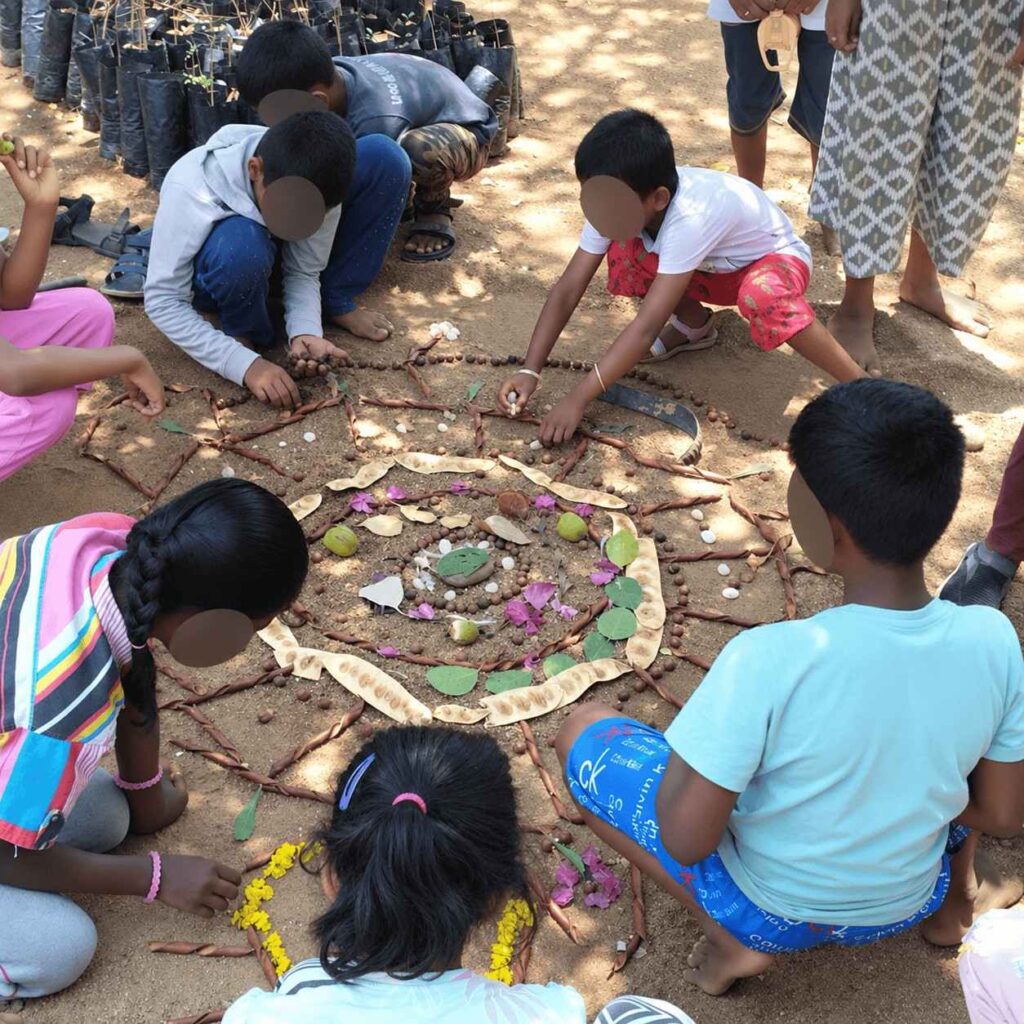

Meet an Educator is a monthly series by Early Bird that features educators across India who are actively spreading the joy of birds and nature. This month’s featured educator is Uma Shunmuganathan, an engineer-turned-educator who integrates nature into learning through explorations, nature journaling, farming, and active forest restoration.
Tell us about your journey. Who are you, where are you based, and what does your nature education work look like? What excites you about the natural world?
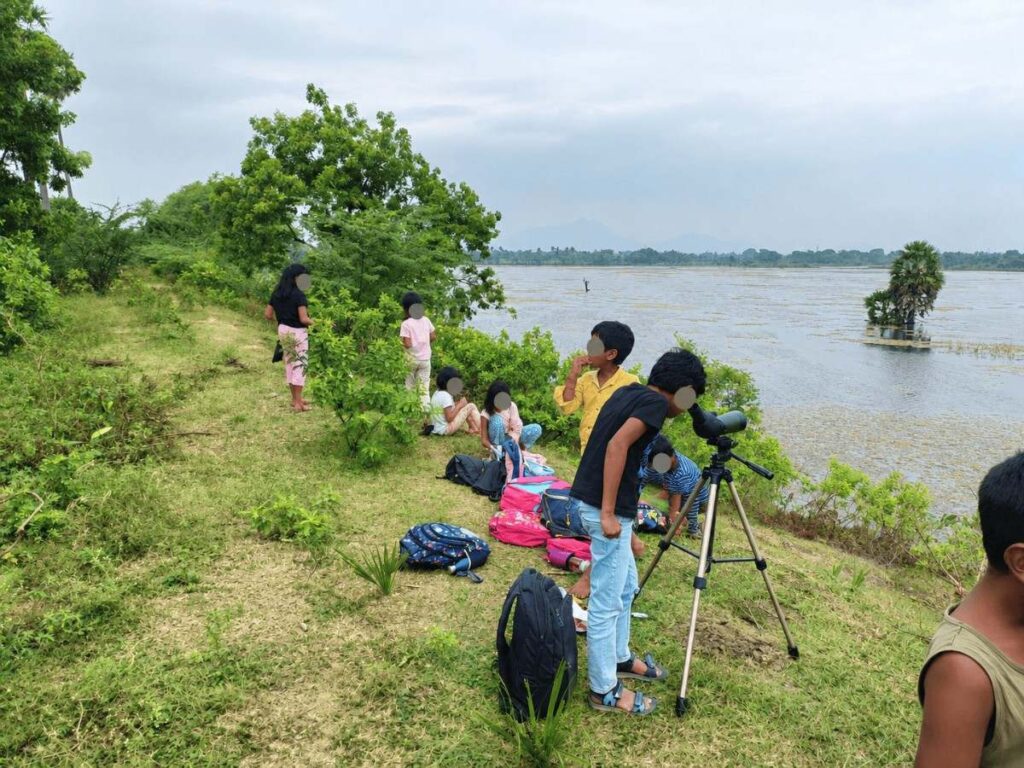
I am an engineer-turned-educator who has been part of the Marudam Farm community, run by The Forest Way Trust, for the past eight years. I live and work in a nature-based school surrounded by over 200 species of trees and plants, working with children aged 7–12. My practice brings learning outdoors through weekly forest explorations, nature observation and journaling, farming, caring for cows, and participating in forest restoration through nursery work, planting and watering. I also facilitate indoor learning through a nature-based, experiential pedagogy that connects children deeply with their place and the living world around them.
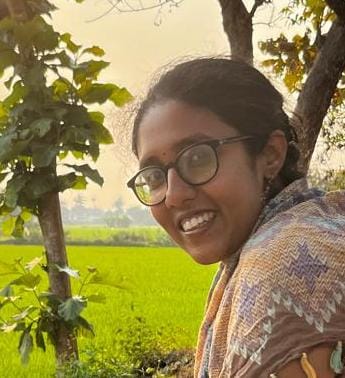
What is an approach, tool, or resource that has worked well for you in engaging children with nature?
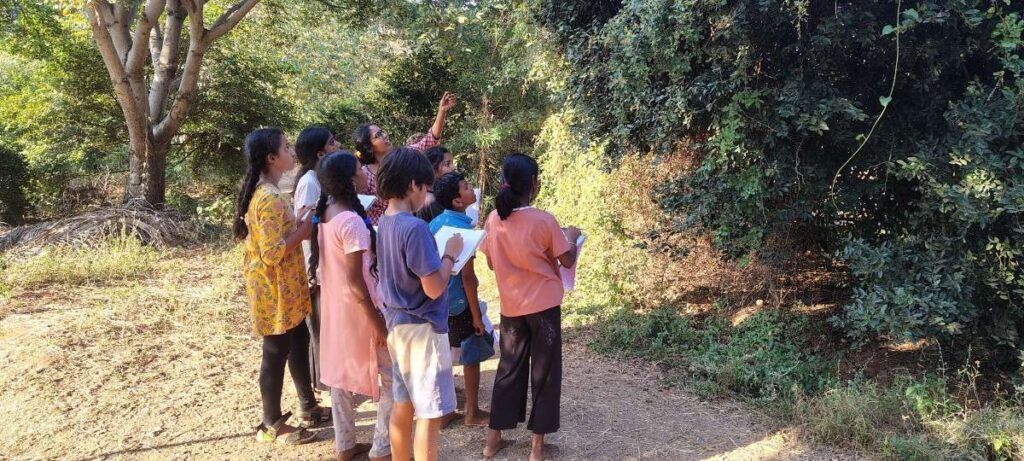
a. One approach that has worked well for us is place-based education through sustained, repeated engagement with the same landscape. As an anchor teacher, I take groups of primary-school children to the forest every week to spend time on Arunachala Hill. When children return to the same place consistently, nature becomes personal and meaningful. They begin to notice subtle shifts—recognising individual trees, flowering and fruiting patterns, animal tracks, and seasonal changes. What makes this especially rewarding is that this relationship with the land continues as children grow from kindergarten through high school, with different anchor teachers carrying the connection forward. They are not just learning about a place; they are growing with it.
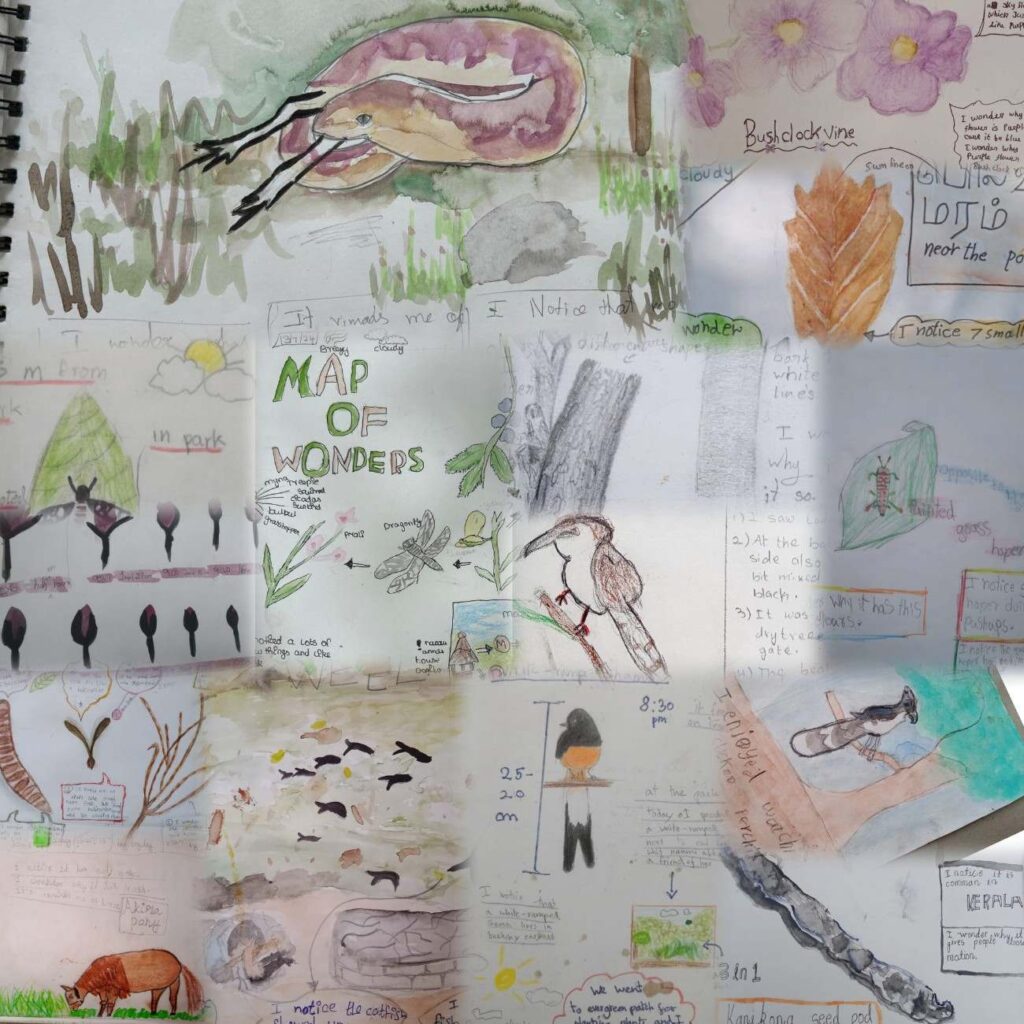
For the past few years, I have found nature journaling to be a particularly powerful tool within this approach. By drawing, writing, measuring, questioning, and recording observations, children learn to slow down and look closely. Over time, their journals become a living record of both the changing landscape and their evolving relationship with it. I have found that this combination of time, familiarity, observation, and reflection helps children develop not only knowledge about nature, but also curiosity, sensitivity, belonging and a sense of responsibility toward the living world around them.
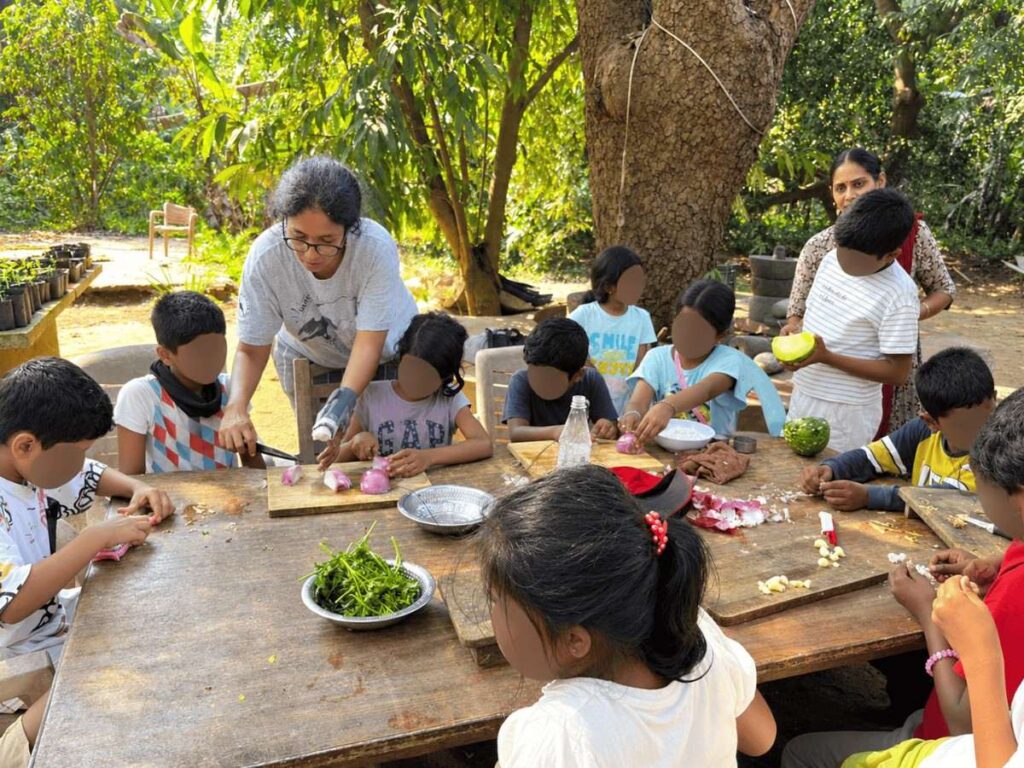
b. Another approach that has worked well for me is bringing the living world around us into everyday classroom learning, especially language. I consciously introduce nature-based references and vocabulary into lessons to help children describe and understand nearby wildlife. For example, while learning verbs in Grade 3, children can explore the different ways animals and birds move, feed, communicate, and interact. Similarly, during lessons on the human body, we compare corresponding structures in plants, insects, and animals. This expands their vocabulary while also helping them observe and make connections with the living world around them. Introducing the story of natural evolution at a young age has also helped children develop a sense of where we come from and recognise themselves as part of the larger web of life.
c. Another approach is exploring the hidden stories behind everyday items. Stories such as The Story of a Pen, The Story of a Dress, or The Story of a Dosa help children trace an object’s entire lifecycle, what materials and resources are involved in making it, and what happens to it after we use it. This helps them recognise that even ordinary objects and everyday choices are connected to nature in ways that are often indirect and invisible. It gently encourages children to look beyond the object itself and understand the relationships between our lives, our consumption and the natural world.
Can you share a memorable moment from your experiences?
One of the most memorable moments from our nature walks was watching a group of eight-year-olds willingly carry 8–10 litres of water uphill to water newly planted saplings, every week for an entire month during summer. They carried the weight for almost a kilometre, climbing to an elevation of around 300 metres, without needing to be pushed or persuaded. What touches me most is that this happens year after year; I find a handful with each new class.
That experience taught me something deeply. Such self-motivation cannot come simply from a teacher’s influence alone. It comes from an emotional relationship built over time. These children had been seeing and acknowledging the presence of the forest since kindergarten. The hill had gradually become familiar and meaningful to them. Their willingness to care for its young trees felt like a natural expression of that connection—an example of how knowing a place deeply can grow into caring for it deeply and what it means to grow together with them.
What is a major hurdle you have faced? How did you overcome it?
One major hurdle I have encountered while working with children aged 7–11 is their strong understanding of ‘right’ and ‘wrong’. When their experiences at school differ from what they encounter at home or in society, it can often create confusion. For example, playing in soil, walking barefoot, encountering a snake, segregating waste, working with cow dung, or questioning our everyday use of plastic can sometimes seem contradictory to what children hear and experience outside school.
I have found that the way forward is not to present our approach as the only ‘right’ way, but to help children understand and engage with the realities around them. Bringing parents into the learning journey is essential. Conversations with parents, sharing the experiences and reasoning behind our practices, and honouring different perspectives help children navigate these differences with greater understanding.
Rather than shielding children from contradictions, helping them observe, question, and think critically transforms nature-based learning into an active process of inquiry—rather than a rigid set of rules.
What advice would you give to fellow educators facing similar situations or just starting out?
I feel nature education is not just about learning information about the trees and animals around us, but about appreciating and accepting diversity around us. It demands deeper connection and action as a community in our everyday lives, bringing how we learn and how we live into true alignment.
In a world facing the climate crisis, where children are often surrounded by anxiety and pessimism, I feel that an educator has another important responsibility—to keep alive our own capacity to learn, wonder and respond to the living world, while creating small but powerful stories of hope for the younger generation to witness. I feel privileged to create and live these small stories of care, resilience and possibility alongside children.