
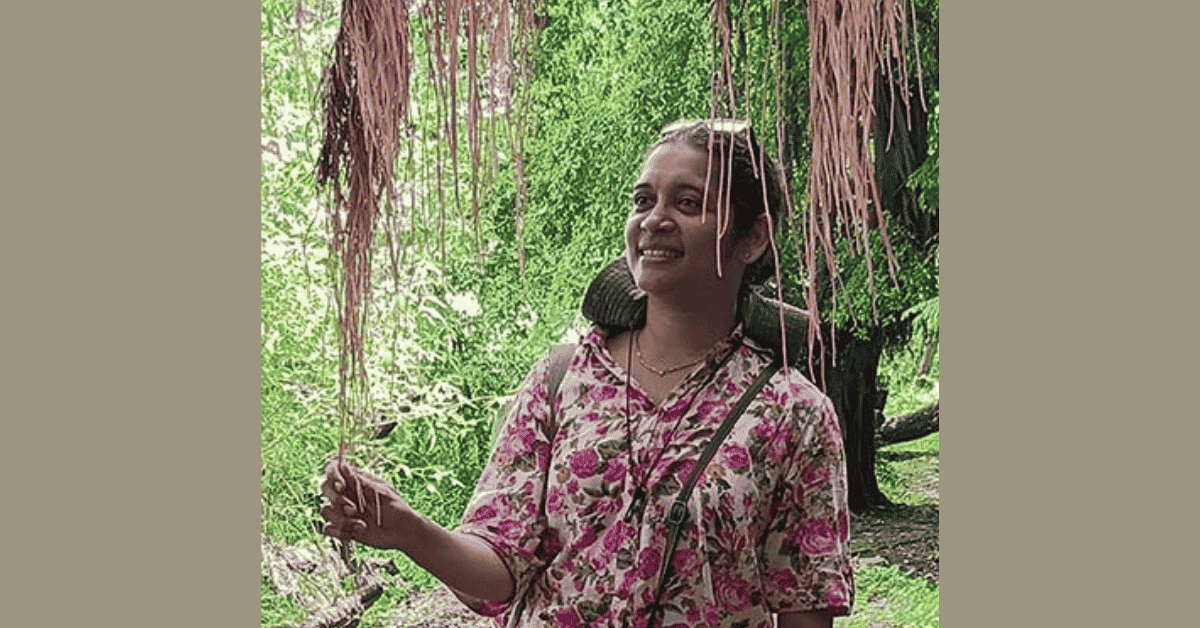
Meet an Educator is a monthly series by Early Bird that features the work of educators across India who are actively spreading the joy of birds and nature. This month’s featured educator is Sweedle Cerejo-Shivkar, a Mumbai-based botanist and educator who inspires to connect people with biodiversity through curated tree walks and creative workshops.
Do tell us about yourself, where you are from, and your work
A botanist with a doctorate in Botany from St. Xavier’s College, Mumbai, where my research focused on the taxonomy and ecology of the Orchidaceae family across Mumbai and Thane districts. My work bridges science and outreach. I assist organisations with plant identification, edit and author educational resources and design interpretive materials such as information boards for gardens. I have contributed to books including Wild Forgotten Foods and Millets for Children; authored a booklet on Indian Laburnum and created resources on mangroves, climate change and carbon footprints. Through my venture ‘The Leafy Walks’ and collaborations with reputed institutions, I lead tree walks that help children and adults connect with plants. I also curate workshops for diverse age groups, blending science, art, and storytelling to nurture curiosity and appreciation for the natural world.
What excites you about the natural world?
Nature reveals its wonders everywhere—on a balcony, through a window, or along city lanes and gardens. Living in Mumbai, my excitement begins right outside my window. Each morning feels like a new chapter: trees subtly transform with changing light and weather, insects hover and flutter, and birds perch, feed, defend territories, or nest. Every green giant that stands, flowers, and fruits becomes a stage for countless small dramas.
One tree, the Country Almond outside my window, perfectly captures this magic. With every season, it dons a fresh look… tender leaves of varying shapes and hues, flowers that invite bees, wasps, flowerflies, spiders, mantises, moth caterpillars, butterflies, and birds. Watching this vibrant exchange of life fills me with awe. Hours slip by as I observe the flutter and hum of creatures struggling to survive around it. Nature’s theatre unfolds daily, reminding me that wonder doesn’t always lie in distant forests; it thrives right where we live.
When and how did you get interested in bird/nature education?
My interest in nature education began about twenty years ago, when I started working with schools to strengthen their Environmental Education curriculum. I was involved in planning teacher training workshops and preparing lesson plans, which brought me into constant interaction with school students. Curating workshops to make nature engaging challenged me to read more, observe details, and deepen my understanding, gradually taking my interest in the natural world to the next level. These interactions were never one-sided; they became a dynamic teaching-learning process that enriched both the students and me.
As I visited national parks, sanctuaries, and diverse habitats, I was filled with awe at the richness of nature. At the same time, I realised a gap—the lack of awareness and empathy for plants, wildlife, and ecosystems among many children and adults I met. This realisation inspired me to share these wonders through nature education, fostering curiosity and connection with biodiversity.
What do you hope to achieve through your education work?
Through my work, I hope to nurture ecological literacy and a deeper awareness within communities, encouraging people to appreciate biodiversity while recognising that humans are part of nature. I aim to help children and adults see trees not as a plain green background, but as living individuals with their own rhythms and stories. Every change in a species brings new challenges, and understanding these dynamics fosters empathy and responsibility.
I also wish to highlight the importance of urban biodiversity, showing how even in limited urban spaces, diversity can be built by planting the right trees and plants. This approach not only enriches our surroundings but also strengthens ecological resilience in urban landscapes.
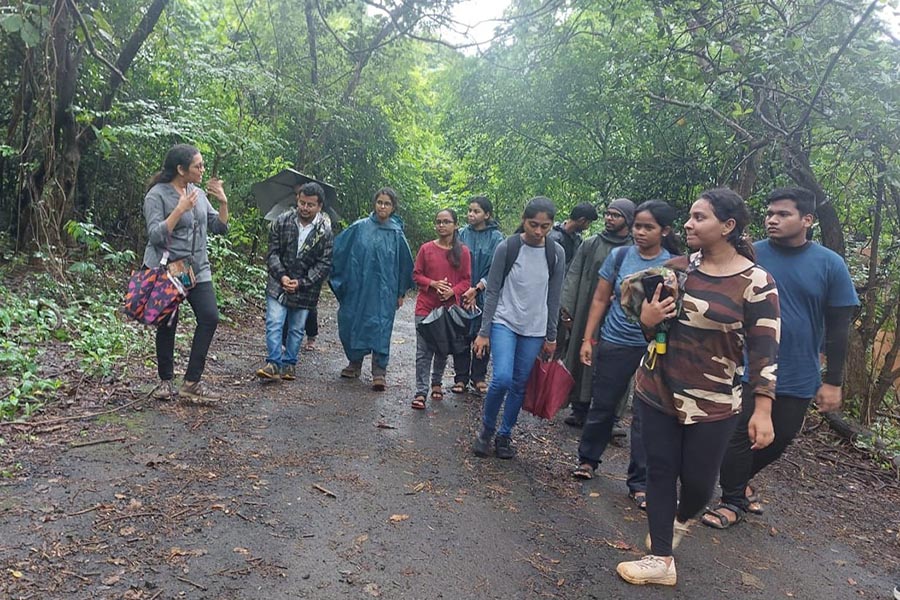
Regular tree walks are central to this vision. They provide opportunities for participants to observe, reflect and develop sensitivity toward trees and ecosystems. By combining science, storytelling and direct experience, I hope to inspire curiosity, respect and a lasting connection with the natural world, resulting in communities that value and protect biodiversity.
Why do you believe it is important for children to learn about birds or connect with nature?
I believe it is vital for children to connect with nature, which offers calm while sparking curiosity and awareness of the immense diversity around us. During their formative years, birdwatching or nature observation nurtures qualities that extend far beyond the outdoors. It improves attention span, sharpens memory and develops problem-solving skills. As children watch birds or trees, they begin to ask questions, whether simple or scientific, notice habits and behaviours, and explore different habitats. This process cultivates patience and encourages teamwork, as they share discoveries, help one another and experience the joy of learning together.
Engaging with natural elements also fosters communication and collaboration, creating a sense of shared discovery. Children gradually realise that birds, insects, plants and people are interconnected, each part of a larger ecological picture. Such awareness builds empathy and respect for life.
Nature walks and tree appreciation sessions provide meaningful alternatives to excessive screen time, which dominates modern lifestyles. These experiences not only promote healthier living but also instil civic sense, encourage personality development and teach resilience. By connecting with nature, children learn values of coexistence and adaptability….. skills that prepare them to navigate the challenges of a competitive world while remaining rooted in compassion and ecological responsibility.
What tools or resources have helped you in teaching about birds? Can you describe an approach that has worked exceptionally well for you?
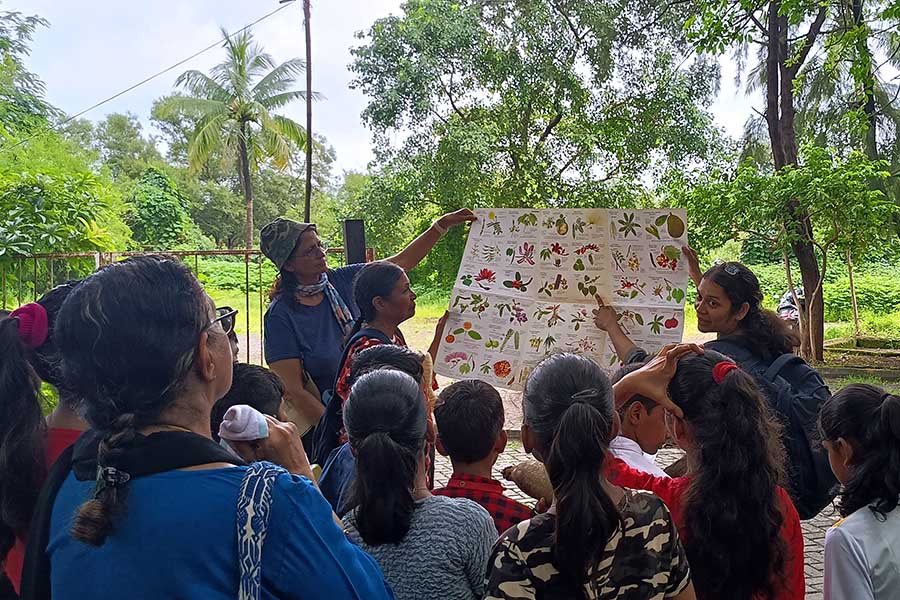
For me, the most valuable tools in teaching about plants are the elements of nature itself. Nothing compares to the impact of a “show and tell” approach—holding up a fallen leaf, a seed, or a fruit instantly sparks awe and curiosity in both children and adults. These simple resources help participants appreciate plants as living beings rather than abstract concepts. Over the years, I have collected such natural (fallen) materials to use as teaching aids, and they have consistently proven effective in creating lasting impressions.
Alongside these, I design interactive cards, visual aids and printed materials, many of which I create myself. Resources from organisations such as Early Bird and SeasonWatch also enrich my sessions, offering engaging, accessible tools that complement the natural settings of walks or workshops. While sessions are carefully planned, I always keep activities handy to adapt to the moment. With children, impromptu, simple activities often work best, encouraging spontaneous exploration. With adults, interactive trails and open conversations awaken child-like wonder, leading to delightful “ooh” and “aah” moments.
I find that drawing similarities and making comparisons simplifies complex ideas, making them easier to grasp. This blend of natural elements, creative resources and interactive approaches has worked exceptionally well, allowing participants to connect deeply with biodiversity and carry forward a sense of appreciation and responsibility toward the natural world.
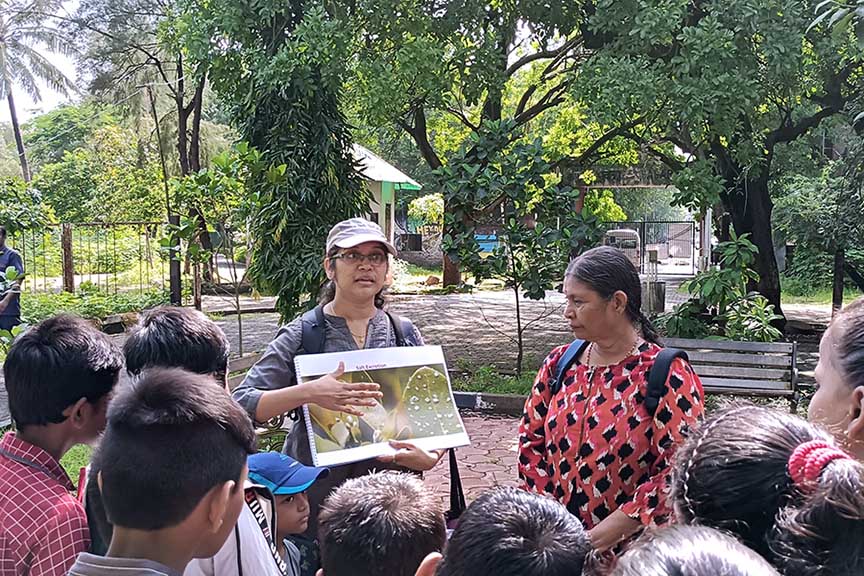
Photo credits: Adesh Shivkar
Have you encountered a significant challenge as a bird/nature educator? How did you overcome it?
One of the most significant challenges I have faced as a nature educator is generating genuine interest in plants. Unlike birds or other animals, plants are often perceived as static, ordinary, or even boring, making it difficult to capture people’s attention. In Mumbai, especially, there are very few tree walks designed to spark curiosity about botany, so creating that initial connection has always been a hurdle.
To overcome this, I started using storytelling in my sessions. Narratives about the history, cultural significance or ecological role of a tree bring a sense of awe and wonder, helping participants relate to plants in a more personal way. Sharing experiences allows individuals to connect their own observations with broader ecological insights. I also keep my walks simple and accessible; two-hour sessions fit easily into busy schedules while still offering meaningful engagement.
Timing has proven crucial as well. Organising walks during the flowering season fascinates participants, who witness trees at their most vibrant. Combined with interactive tools such as visual aids and cards, and natural elements like seeds or leaves, these approaches help people appreciate plants as living beings. Over time, this blend of storytelling, seasonal timing, and hands-on resources has transformed initial indifference into curiosity and appreciation.
Do share any memorable moments or experiences you have had in teaching kids about birds/nature. Can you recall any insightful instance that shaped your perspective?
It is difficult to single out one defining moment, because every walk, every session, and every interaction with children has been memorable in its own way. Each experience has left me inspired as an educator, whether it was the sparkle of curiosity in a child’s eyes or the collective joy of discovery during a nature walk. These countless awe-inspiring moments have shaped my perspective and reaffirmed the value of nature education.
One instance that remains especially close to my heart occurred during a session on seeds at an eco-school for underprivileged children. The students were introduced to the concept of seeds, how they differ from one another, their forms and functions, and even watched a documentary to deepen their understanding. Yet the most unforgettable moment came when I demonstrated how to make a flying seed using origami. Suddenly, the mechanism of dispersal became real and visible. The children were thrilled, each one proudly creating their own paper seed and watching it glide through the air. Their excitement was overwhelming, and the joy they expressed was contagious.
That day reminded me of the power of simple, hands-on activities to spark wonder and connect abstract concepts to lived experience. It reinforced my commitment to designing thoughtful, engaging workshops that make nature education both accessible and unforgettable.
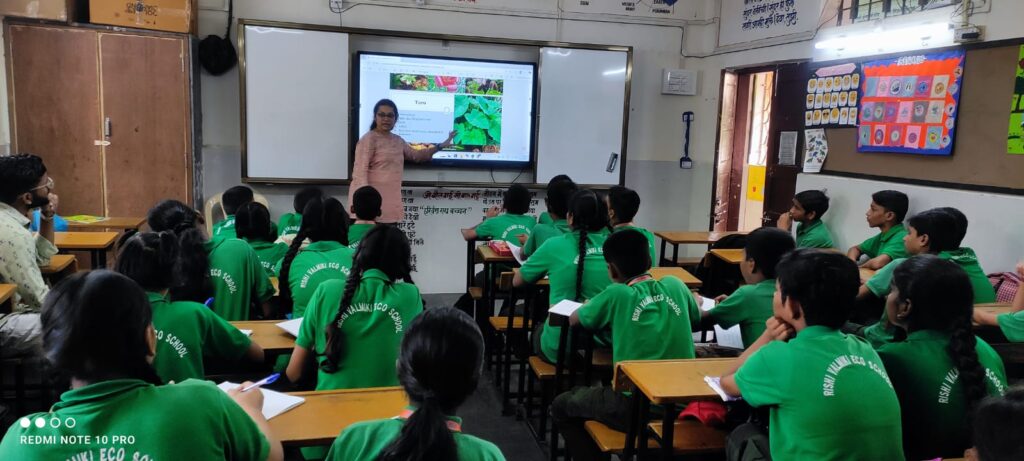
Photo credit: Shruti Waghela
Have you noticed any changes in your learners after they received exposure to birds and nature-based learning? If yes, what are they? If not, why do you think that is?
Yes, I have noticed meaningful changes in many participants after they experienced plant and nature-based learning. These shifts are gradual but significant. Learners often become more conscious of their surroundings, developing empathy and curiosity about the natural world. Many return for multiple sessions, eager to deepen their understanding.
Exposure to urban biodiversity has inspired some to plant native trees that attract birds and insects, while others have started kitchen gardens or encouraged friends and family to join nature walks. Such actions reflect a growing awareness of how small steps can support ecological balance in cities.
I feel gratified that my walks and sessions have sparked sensitivity toward plants, birds, and urban ecosystems. These transformations in learners continue to inspire me in my mission to foster appreciation and conservation of nature.
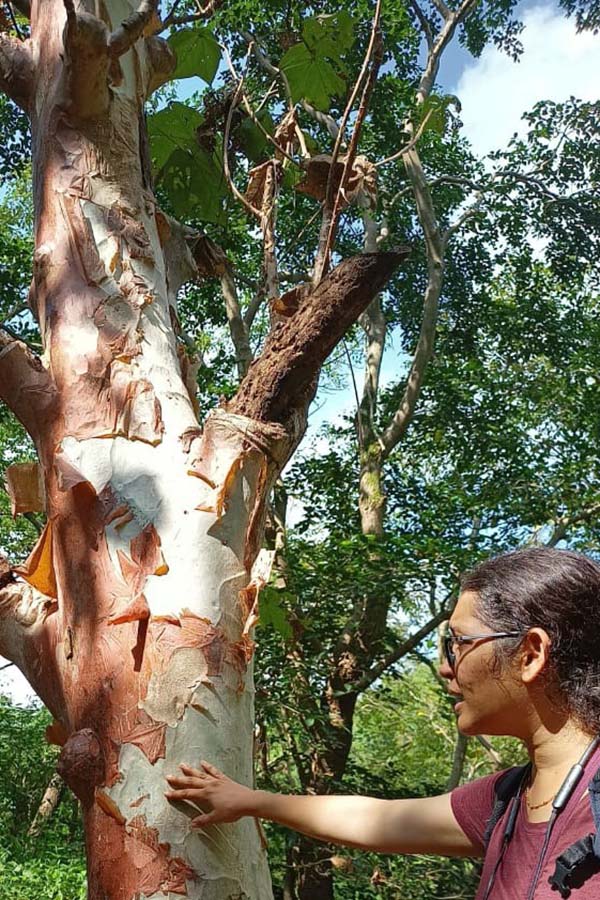
Photo credits: Yojana Singh
What message would you have for your fellow educators, or for someone starting their nature education journey?
The journey of nature education is gradual yet deeply rewarding. It’s an ongoing process of discovery where we remain lifelong learners, guided by nature, the greatest teacher of all. Engage participants during walks with fascinating facts and stories that spark curiosity. To do this effectively, keep enriching your own knowledge through books, articles, and scientific papers.
Remember, a nature educator is an ambassador of nature. Every session and interaction should inspire respect, empathy and a sense of responsibility towards conservation and sustainable living. Children, especially, look up to us as role models; they absorb not only what we teach but how we behave. Hence, our approach must be both scientific and sensitive, blending accuracy with wonder. When we teach with authenticity and enthusiasm, we nurture future custodians of nature who will carry forward the spirit of care and curiosity.