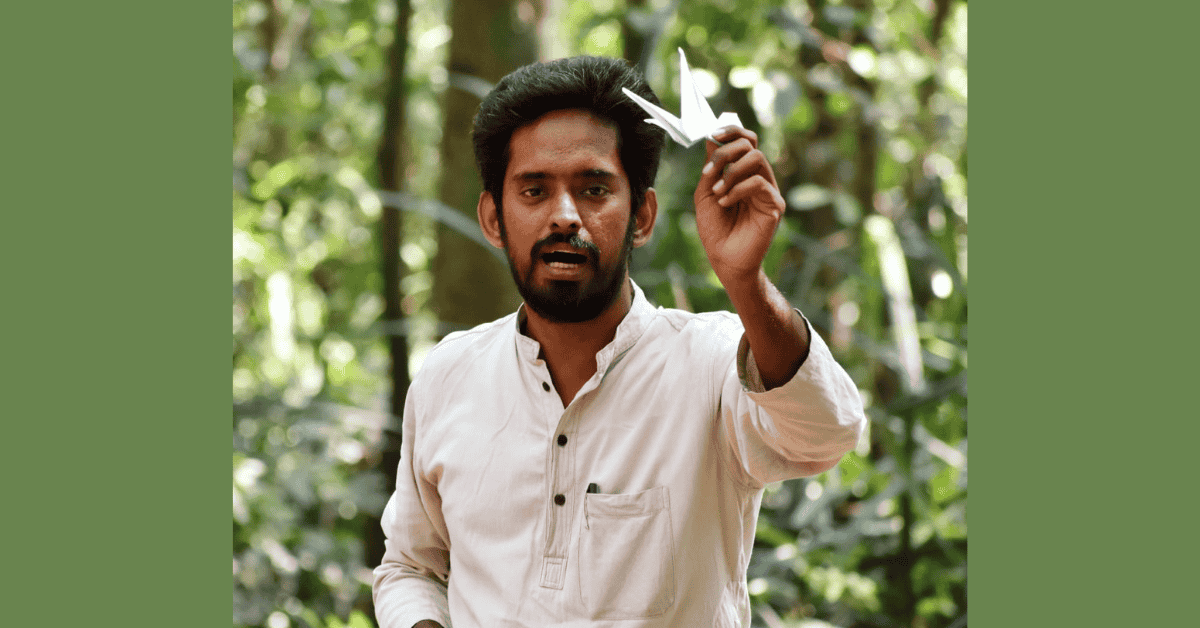
Meet an Educator is a monthly series by Early Bird, where we feature the work of educators across India who are actively spreading the joy of birds and nature. This month’s featured educator is Aravinda Kudla, a primary teacher from Mangalore, who connects children with nature through storytelling and observation.
Do tell us about yourself, where you are from, and your work
I am from the coastal town of Mangalore (Karnataka). A place where two rivers, ‘Netravathi’ and ‘Phalguni’, meet each other as well as meet the sea. My passion for nature and theatre began in childhood, alongside a love for drawing, cycling, and hiking. Buying a camera and taking pictures has been one of my dreams. Photography is a hobby I started after I got my job, which has led me deeper into nature and natural wonders.
I hold a B.Sc. and a Master’s in Education from the Regional Institute of Education (RIE), Mysore. I started my career as a teacher in a private school. Then I got a Government posting. Currently, I teach Science, EVS, and Mathematics at the Government Higher Primary School, Moodambail (Bantwal Taluk, Dakshina Kannada). Fifteen years of work in rural government schools have helped me develop my interest towards nature.
What excites you about the natural world?
The colours, sounds, and the ability to fly that birds possess, the beautiful patterns and metamorphosis of butterflies and moths, the secret world of frogs, snakes, and spiders, the different sensory powers possessed by animals, and even the power of being stationary, how powerful plants are. As I began attending various workshops on Frogs, Spiders, Butterflies, Moths, and Birds, I was amazed by how wonderful they are. Watching an animal in the wild was more fascinating than seeing them in a zoo. While observing birds and butterflies in my backyard, I was fascinated to know that there were so many things to observe around me. When I sat down with my camera or binoculars, I never knew how the time got past.
The more I knew about nature, the more everything around me seemed to be very different. The Koel, Kingfisher, Magpie-Robin, Drongo, Woodpecker calling in the morning, the calls of Indian Pitta, Frogmouth, Nightjar while I go for a walk in the evening, or the Wood Owl calling in the night when I would be reading, the croaking sound of the frog on a rainy day evening, would start telling me a story. When I read out a bedtime story to my daughter, it sounded very different to me. I felt connections to many things that I knew and many things that we do. Still, I am learning many more things.
When and how did you get interested in bird/nature education?
My first posting as a government school teacher was near Samse in Kudremukh National Park. I lived in the nearby town of Kalasa and cycled 10 km to school each day. Around this time, I had just bought a camera and was learning photography. Whenever I had leisure time, I would go to my school garden, sit and observe nature and take photos. Also, while cycling every morning and evening was very beautiful, I would stop at some places and take pictures.
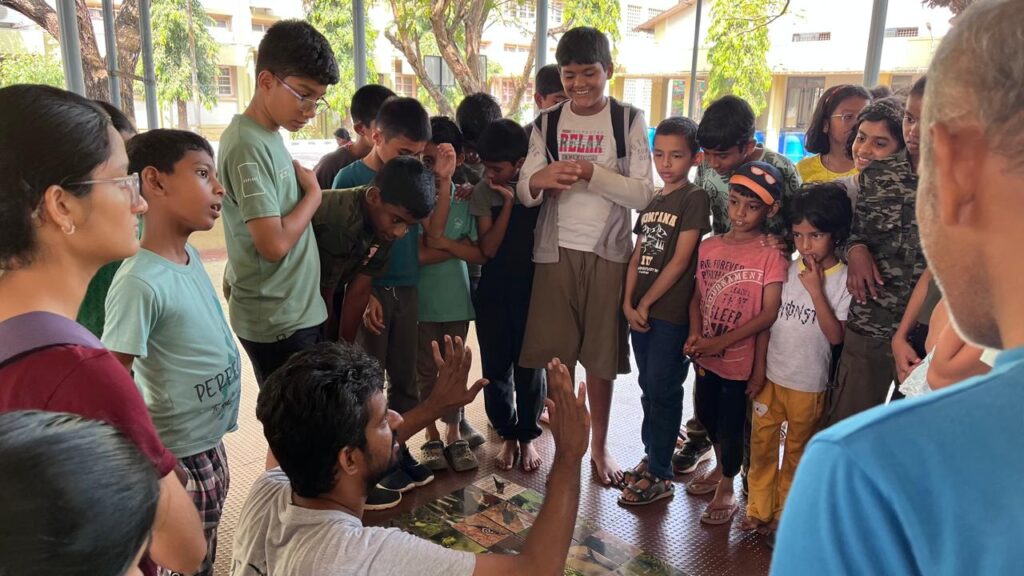
During breaks, my students would ask to see my photos and ask me to show them what I got. They would ask questions about it. Many times, when I didn’t know the answers, I would post the images on social media for identification. I used to read the stories of Kannada writer K. P. Poornachandra Tejaswi, who has written extensively on nature. All these experiences formed a perfect blend to launch my path as a nature lover, and answering the questions of my students began to shape me into a nature educator.
What do you hope to achieve through your education work?
During the 2020 COVID-19 pandemic, I began documenting my encounters with nature. My friends encouraged it and asked me to write more. I joined a few colleagues to create an online blog for children, where I contributed a weekly bird story. We also conducted caterpillar rearing projects and participated in the Wipro Earthian Project Competition. Later, I began sharing my experiences in Teacher magazine and Kanana, an online wildlife publication. Also, I translated nature education resources, such as ‘What’s that bird’ flashcards, into Kannada. I also volunteered as a trainer for the Gram Panchayat librarians’ project.
While participating in all these programmes, I noticed a lot of nature education resources in English, but there are very few available in Kannada. I used to take these materials to my school and show them to my children. My goal is to create more stories, activities, and interactive content in Kannada that teachers and parents can use to spark an interest in nature among both children and adults.
Why do you believe it is important for children to learn about birds or connect with nature?
In our education system, we place greater emphasis on knowledge. But only real-life experience, through the senses, can give that thrill of connecting with Nature. Only such experience can make children admire the beauty of nature and make them more curious to explore and observe. Only real-life experiences can bring out creativity in human beings. Otherwise, children will know many things but be bound by their own fears and beliefs.
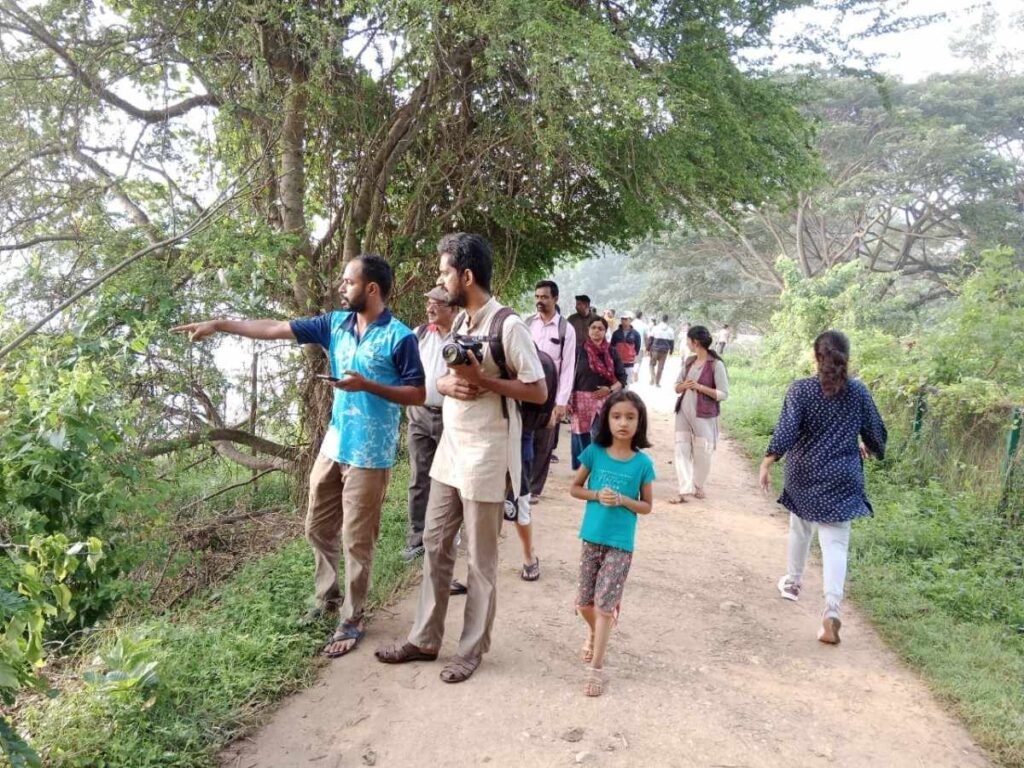
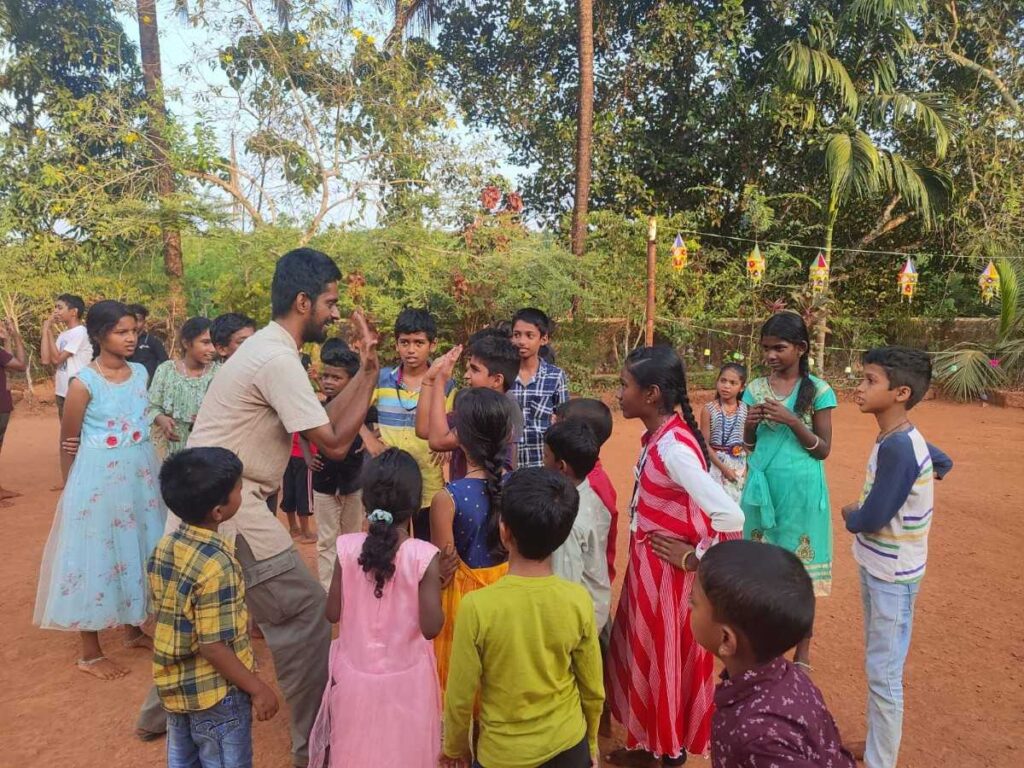
When we take children on a nature walk, the wow that comes out when they see a colourful bird or a unique behaviour. Even adults start enjoying going on a nature walk. During our school’s caterpillar rearing project, students were eager to check their observation boxes every morning. They had a lot to say about it. When a butterfly or moth was emerging from it, that was a fascinating moment for them. After the project, when we asked them to write about it, they wrote happily. A standard classroom lesson would never have brought out such beautiful answers.
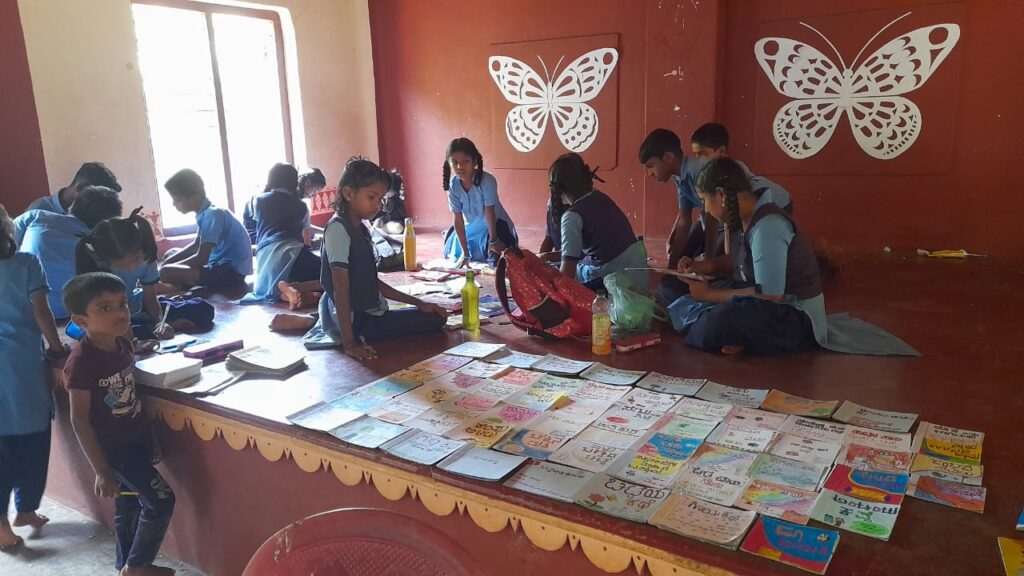
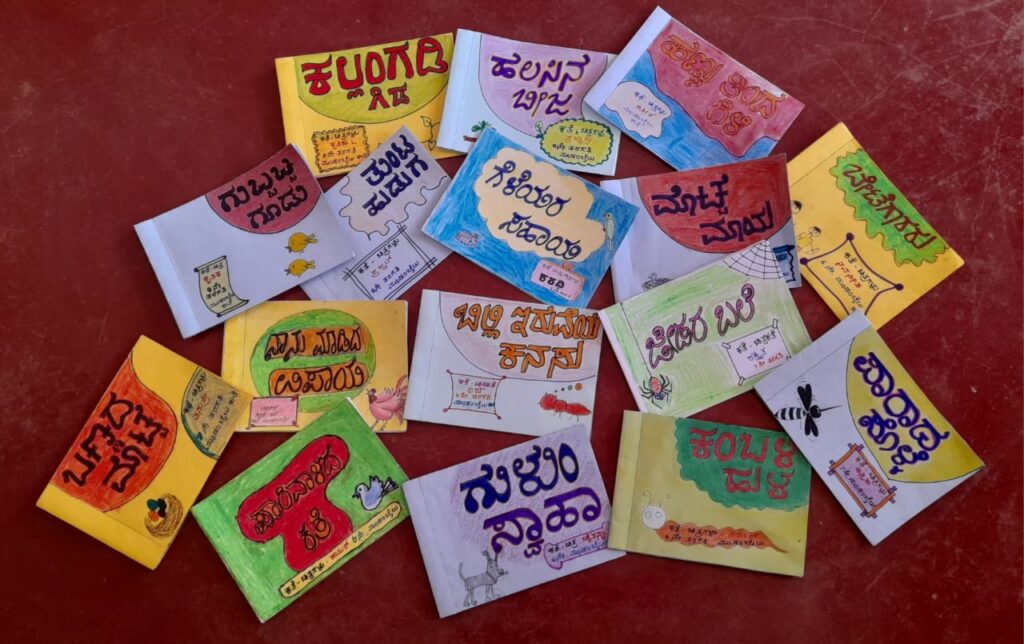
After connecting the children to nature through various activities and engagements, we organised a story-writing workshop where they created their own illustrated books. They wrote illustrated storybooks by themselves. Now, whenever they spot an insect, spider, frog, or bird, they observe it closely and ask me to take a photo. We identify the species together using the iNaturalist app. This is often followed by numerous questions to answer.
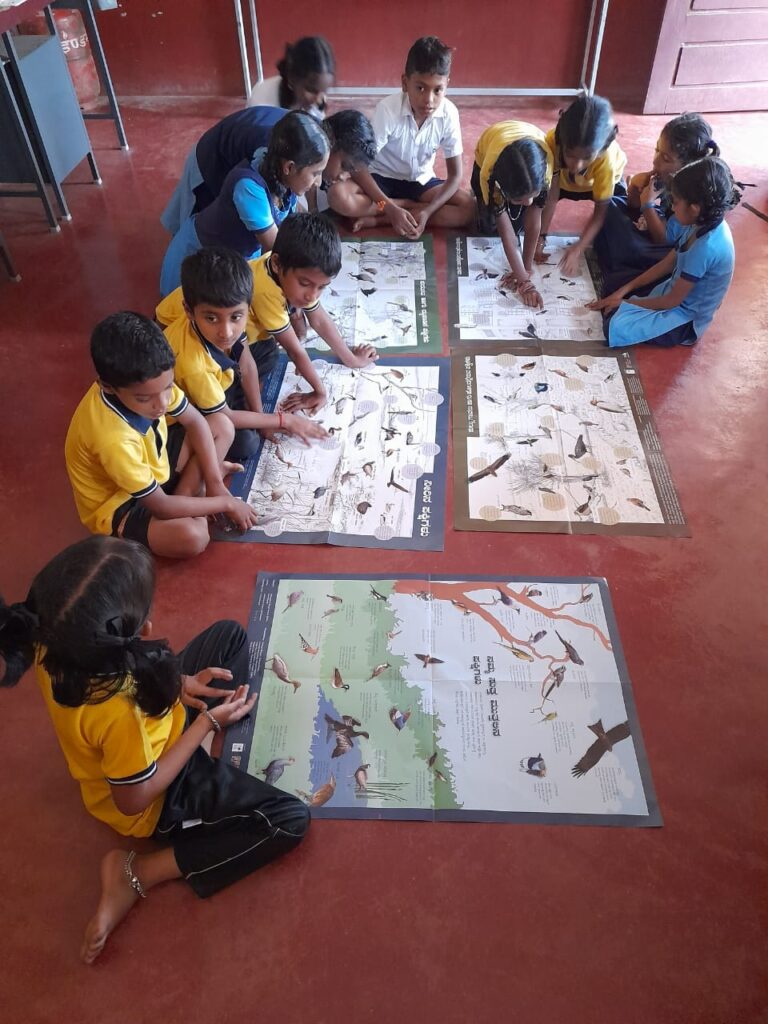
Photo credits: Aravinda Kudla
What tools or resources have helped you in teaching about birds? Can you describe an approach that has worked exceptionally well for you?
In the early days, when I was invited to give presentations at neighbouring schools, I would show photos I had taken and talk about the birds. Later, I began creating and incorporating short video clips into my presentations. I also started encouraging the children to identify local names, mimic bird calls, and describe unique behaviours—an approach that engages them deeply.
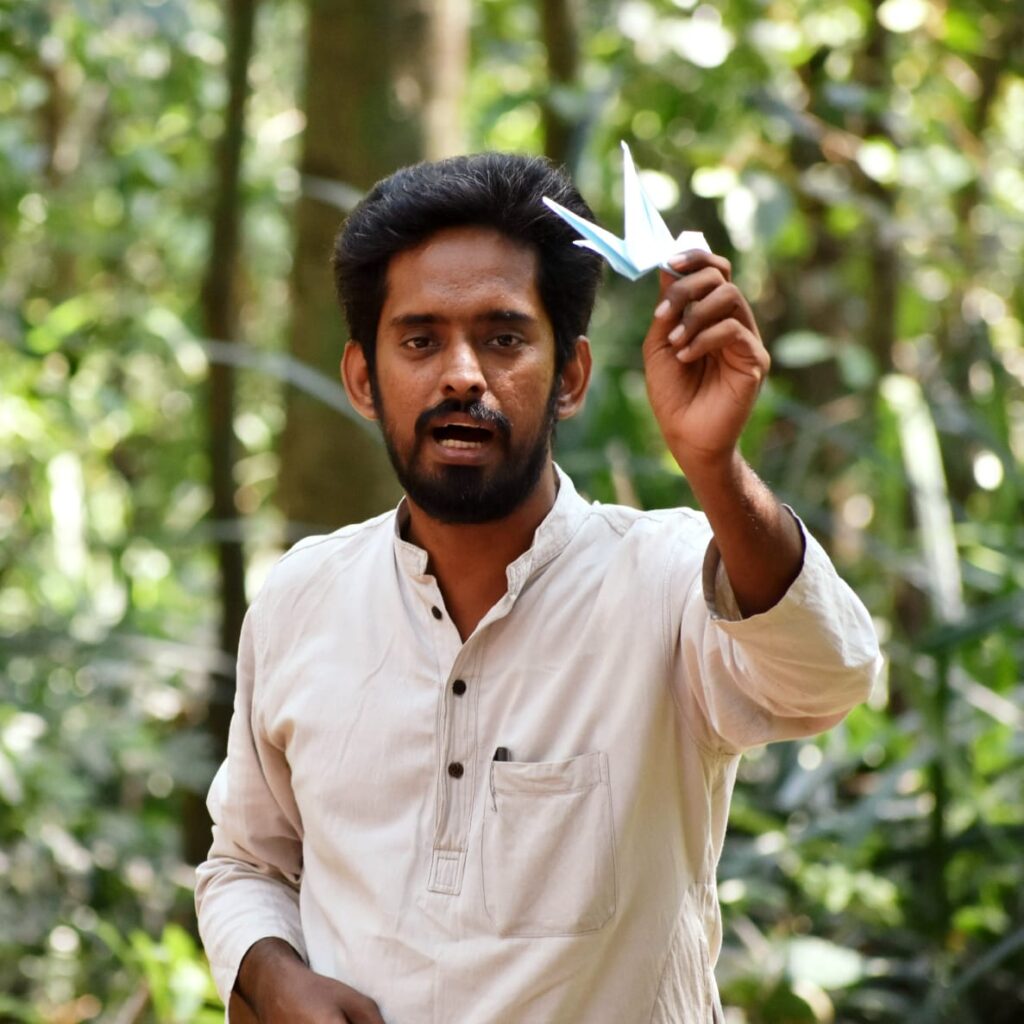
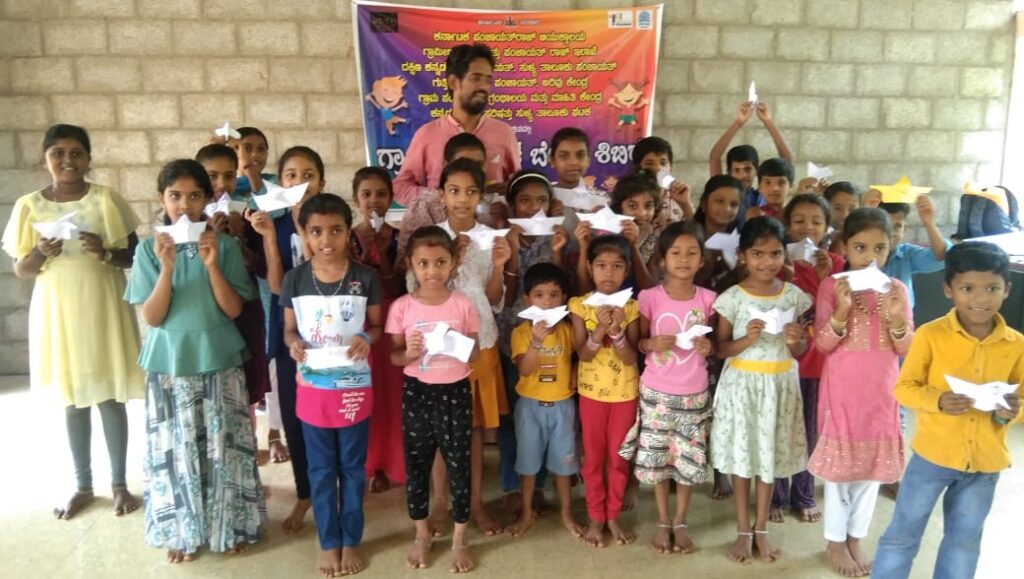
I use origami to create paper birds, which also often works well. I have also used Early Bird materials, such as the ‘What’s That Bird?’ card games, the ‘Bird Survivor Game’, and various colouring activities. Other successful methods include creating birds using natural materials, nature journaling, and even performing short plays about bird life. Ultimately, I’ve learned that the choice of activity depends largely on the group size, the age of the children, and the time we have together.
Have you encountered a significant challenge as a bird/nature educator, how did you overcome it?
It is essential to have a variety of activities to keep them engaged. Due to the internet and social media, they are now exposed to a vast amount of information; therefore, merely sharing facts is no longer effective. They need personalised activities or challenges to hook them to a subject. They are naturally inquisitive and thrive on physical activity.
On the other hand, children over 10 often prefer long-term goals, such as project-based work. On the other hand, children over 10 often prefer long-term goals, such as project-based work. They look for unique ways to express themselves and gain recognition within their group. They enjoy using technology—handling cameras, taking photos, and creating short videos to share their perspectives. In both cases, nature education is most effective when conducted in small groups.
Do share any memorable moment or experience you have had in teaching kids about birds/nature. Can you recall any insightful instance that shaped your perspective?
During our “Storyweaving” nature workshop at the school summer camp, my wife, Mrs Shruthi—who is also a teacher at the school—and I worked alongside the children, helping them with page layouts and illustrations. We began in the morning, and by 2:00 PM, no one was willing to break for lunch. Everyone was so deeply involved in their stories that they didn’t want to stop. What was most remarkable was that we used no mobile phones or electronic gadgets. To our surprise, this intense focus lasted for four days, with some children creating as many as four storybooks of their own. We never once had to say ‘Maintain silence’.
That experience taught us as educators that personal experience and self-expression are what truly matter to children. When we design activities that tap into their creativity, they will naturally and wholeheartedly engage with them.
Have you noticed any changes in your learners after they received exposure to birds and nature-based learning? If yes, what are they? If not, why do you think that is?
Yes, I have seen a significant change in them. Previously, many were afraid of spiders, caterpillars or frogs — some would shout with terror, and some would harm them by throwing stones or hitting with a stick. They also held many misconceptions and superstitions regarding lizards, snakes, and insects.
Since being introduced to nature, they are far more curious. Now, they respect an animal that enters their class, and often ask me to take a picture and identify it. They ask insightful questions about what it eats, why it makes such a sound, why it is not seen in some months of the year, where it lays eggs, and why it is so colourful or not. They even share photos of interesting finds from their homes to ask for identification. I am deeply heartened by the way these children are respecting nature and developing a genuine interest in it.
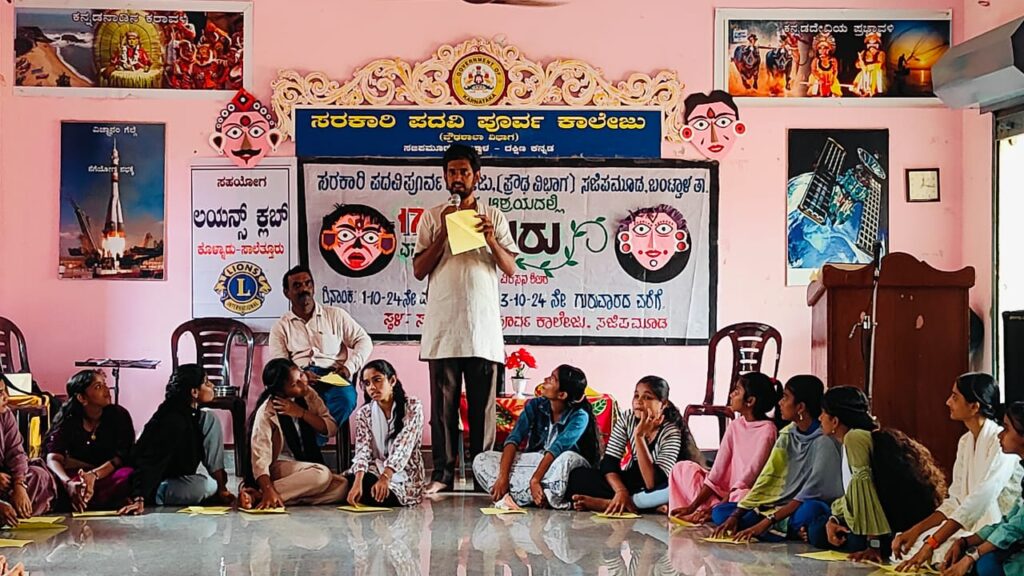
Photo credits: Balaskrishna Shetty
What message would you have for your fellow educators, or somebody starting out in their nature education journey?
Stay curious. Spend time in nature. Seek out local knowledge. Find creative ways to inspire children. Share what you know, and never stop learning from those around you.
Great initiative sir. Best wishes.